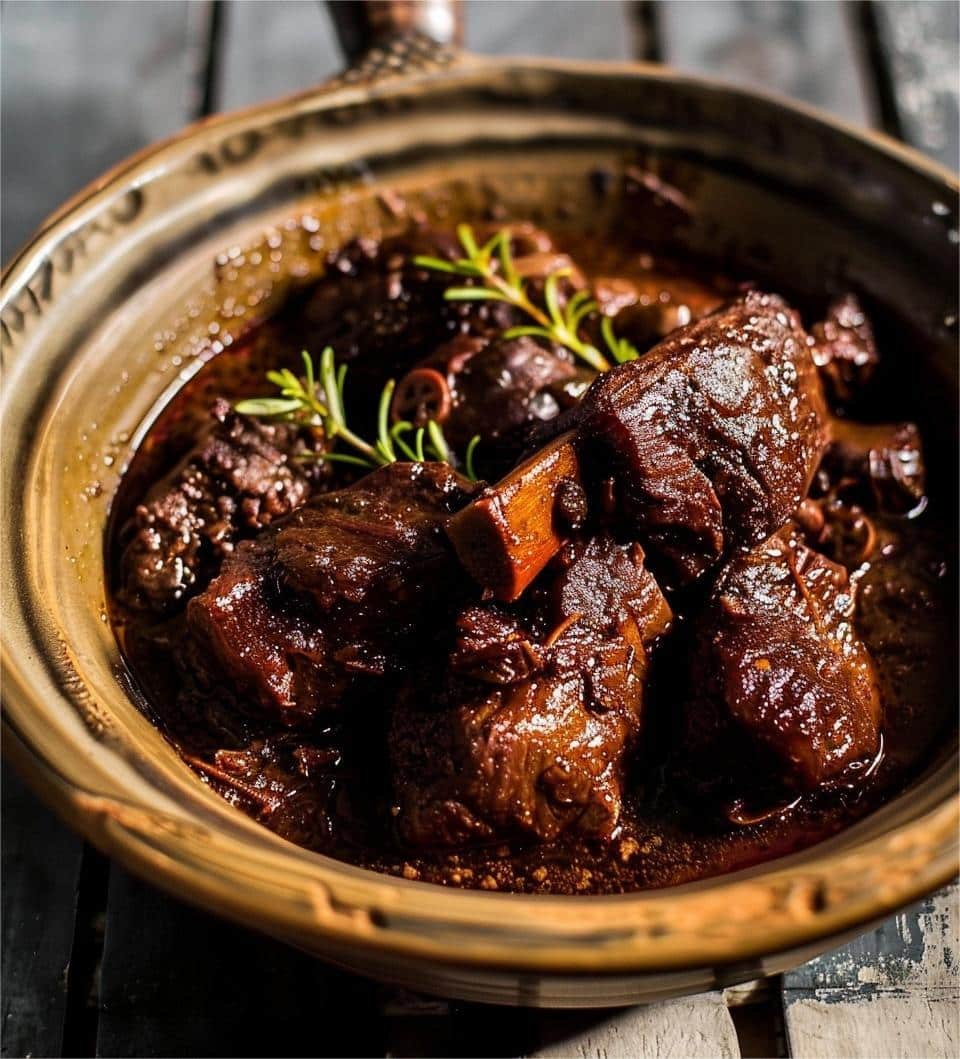
Beef Rendang is a deeply aromatic Indonesian curry stew made by slowly braising beef in coconut milk and a rich spice paste until the sauce caramelizes and clings to tender chunks of meat. The result is intensely flavorful, slightly nutty, and beautifully complex with layers of spice, sweetness, and warmth.
Why You’ll Love This Recipe
This Beef Rendang delivers authentic flavor with simple techniques. The long, slow cooking process transforms affordable cuts of beef into melt-in-your-mouth bites coated in a thick, caramelized coconut sauce. The spice paste is blended in minutes, yet creates extraordinary depth. It’s perfect for special occasions, meal prep, or whenever you want a comforting, restaurant-quality dish at home. Even better, the flavor improves the next day.
Ingredients
(Tip: You’ll find the full list of ingredients and measurements in the recipe card below.)
For the beef:
2 ½ pounds (1.1 kg) beef chuck, cut into 1½-inch (3–4 cm) cubes
1 ½ teaspoons salt
1 teaspoon sugar
For the spice paste (rempah):
8 dried red chilies, softened in hot water for 5 minutes and drained
6 shallots (about 150 g), roughly chopped
5 cloves garlic
1 ½ inches (4 cm) fresh ginger, sliced
1 ½ inches (4 cm) fresh galangal, sliced
2 stalks lemongrass, white part only, sliced
1 inch (2.5 cm) fresh turmeric root (or 1 teaspoon ground turmeric)
2 tablespoons cooking oil
For the braising liquid:
2 cups (480 ml) thick coconut milk or coconut cream
1 cup (240 ml) water
2 tablespoons tamarind paste
4 makrut lime leaves
1 cinnamon stick
2 star anise pods
For the kerisik:
1 cup (80 g) unsweetened grated coconut, toasted until deep golden and ground into a paste
Directions
Prepare the spice paste. Blend the softened dried chilies, shallots, garlic, ginger, galangal, lemongrass, turmeric, and oil into a smooth paste. Add a small splash of water if needed to help blending.
Toast the kerisik. In a dry pan over medium heat, toast the grated coconut, stirring constantly, until deep golden brown. Allow to cool slightly, then grind into a thick paste. Set aside.
Cook the spice paste. In a large heavy pot over medium heat, cook the blended paste for 5–8 minutes, stirring frequently, until fragrant and slightly darkened.
Add the beef. Stir in the beef cubes and coat them thoroughly with the spice mixture. Cook for 3–4 minutes to lightly sear the meat.
Add liquids and aromatics. Pour in the coconut milk and water. Add tamarind paste, makrut lime leaves, cinnamon stick, and star anise. Stir well.
Slow cook. Bring to a gentle boil, then reduce to low heat. Simmer uncovered for 2 ½ to 3 hours, stirring occasionally to prevent sticking.
Reduce and caramelize. As the liquid reduces, stir more frequently. The sauce will thicken, darken, and begin to cling tightly to the beef. Continue cooking until the oil separates slightly and the rendang becomes thick and rich.
Add kerisik. Stir in the toasted coconut paste and cook for another 10–15 minutes until fully incorporated.
Season. Adjust with salt and sugar to balance the flavors.
Rest before serving. Allow the rendang to rest at least 30 minutes before serving for best flavor.
Spicier version: Increase dried chilies to 12 or add 1 teaspoon chili paste.
Milder version: Reduce chilies to 4 and remove seeds before blending.
Pressure cooker method: Cook under pressure for 40 minutes, then reduce uncovered to thicken.
Chicken rendang: Substitute beef with 2 pounds (900 g) bone-in chicken thighs and reduce cooking time to about 1 hour.
Without kerisik: The dish will still be flavorful but slightly less textured and nutty.
Storage/Reheating
Refrigerator: Store in an airtight container for up to 4 days. The flavor deepens over time.
Freezer: Freeze for up to 3 months. Thaw overnight in the refrigerator before reheating.
Reheating: Warm gently over low heat on the stovetop. Add a small splash of water if the sauce has thickened too much. Stir frequently to prevent sticking.
FAQs
What is the best cut of beef for rendang?
Beef chuck is ideal because it has enough connective tissue and fat to become tender and flavorful after long cooking.
Is beef rendang very spicy?
Traditionally, it has mild to moderate heat. You can easily adjust the spice level by changing the number of dried chilies.
Can I use coconut milk instead of coconut cream?
Yes. Both work well. Coconut cream produces a richer and thicker result, but coconut milk is perfectly suitable.
What does kerisik do in rendang?
Kerisik adds a nutty flavor and thickens the sauce, giving rendang its signature texture.
Can I make rendang ahead of time?
Yes. Rendang tastes even better the next day as the flavors continue to develop.
Why does rendang need to cook so long?
Slow cooking breaks down tough connective tissues in the beef and allows the coconut milk to reduce and caramelize.
Can I skip the tamarind?
Tamarind adds subtle tanginess. If unavailable, you can substitute with 1 tablespoon lime juice, though the flavor will slightly differ.
How do I know when rendang is done?
The sauce should be thick, dark brown, and cling tightly to the beef with very little liquid remaining.
Can I cook rendang in a slow cooker?
Yes. Cook on low for 6–8 hours, then transfer to a pot to reduce the sauce until thick.
What should I serve with beef rendang?
Steamed white rice is traditional, but it also pairs well with coconut rice or flatbread.
Conclusion
Beef Rendang is a celebration of slow cooking and bold spices. With its tender beef, caramelized coconut sauce, and aromatic depth, this dish delivers unforgettable flavor in every bite. Whether served for a gathering or prepared ahead for the week, it is a comforting, impressive recipe that rewards patience with extraordinary taste.
A rich and deeply aromatic Indonesian beef curry stew slowly braised in coconut milk and spices until tender and caramelized, creating an intensely flavorful and comforting dish.
Ingredients
For the Beef:
2 ½ pounds (1.1 kg) beef chuck, cut into 1½-inch cubes
1 ½ teaspoons salt
1 teaspoon sugar
For the Spice Paste (Rempah):
8 dried red chilies, softened and drained
6 shallots (about 150 g), roughly chopped
5 cloves garlic
1 ½ inches (4 cm) fresh ginger, sliced
1 ½ inches (4 cm) fresh galangal, sliced
2 stalks lemongrass, white part only, sliced
1 inch fresh turmeric root (or 1 teaspoon ground turmeric)
2 tablespoons cooking oil
For the Braising Liquid:
2 cups (480 ml) thick coconut milk or coconut cream
1 cup (240 ml) water
2 tablespoons tamarind paste
4 makrut lime leaves
1 cinnamon stick
2 star anise pods
For the Kerisik:
1 cup (80 g) unsweetened grated coconut, toasted and ground into a paste
Instructions
Blend chilies, shallots, garlic, ginger, galangal, lemongrass, turmeric, and oil into a smooth paste.
Toast grated coconut in a dry pan until deep golden. Cool and grind into a paste to make kerisik.
Cook the spice paste in a heavy pot over medium heat for 5–8 minutes until fragrant and slightly darkened.
Add beef cubes and coat thoroughly. Cook 3–4 minutes.
Pour in coconut milk and water. Add tamarind paste, lime leaves, cinnamon, and star anise.
Bring to a gentle boil, then reduce heat and simmer uncovered for 2½–3 hours, stirring occasionally.
As liquid reduces, stir more frequently until sauce thickens and darkens.
Stir in kerisik and cook 10–15 minutes until thick and rich.
Adjust seasoning with salt and sugar.
Rest at least 30 minutes before serving.
Notes
Flavor deepens significantly the next day.
Stir frequently near the end to prevent sticking.
Pressure cooker method reduces time but requires final reduction uncovered.
Adjust chilies for desired spice level.
Store refrigerated up to 4 days or freeze up to 3 months.