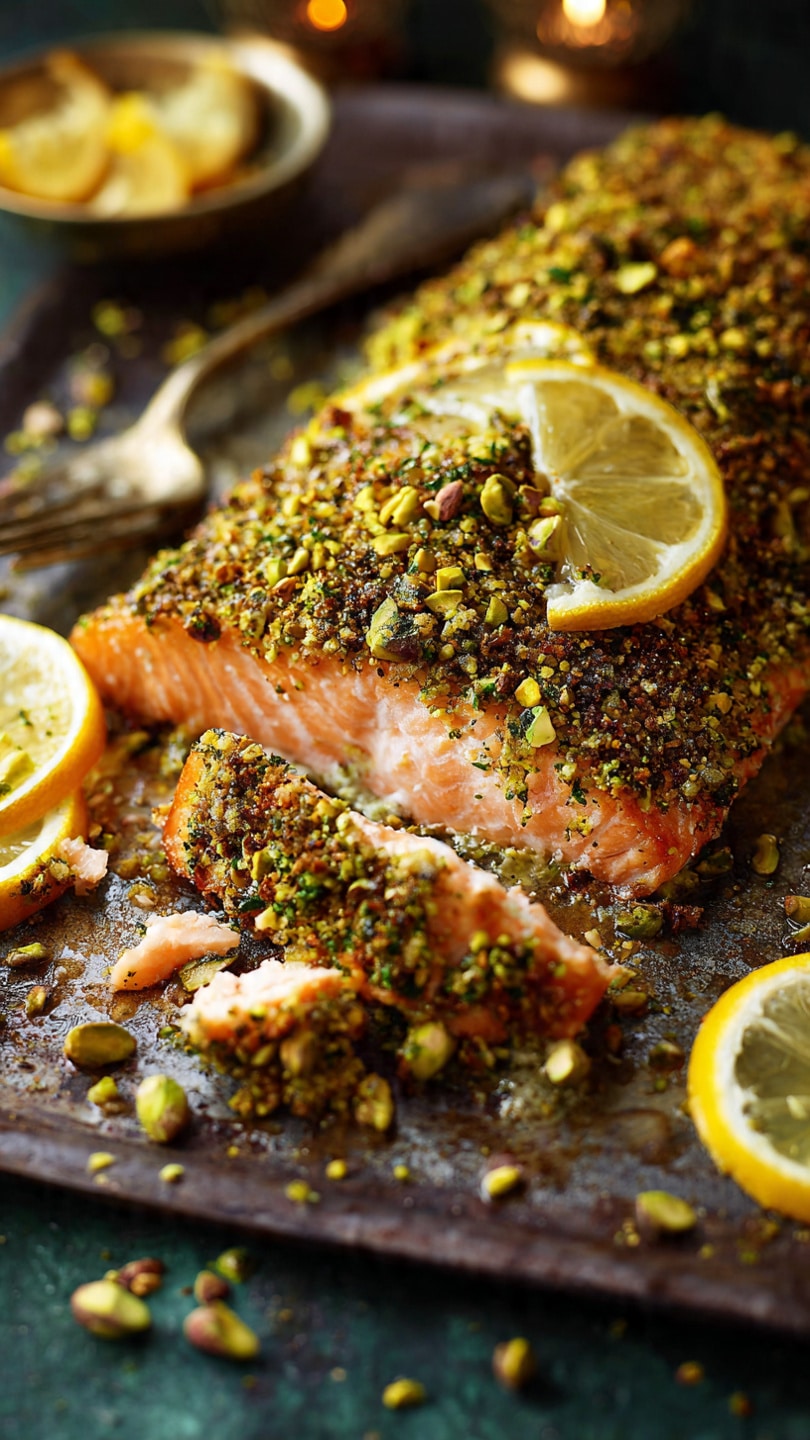
This pistachio crusted salmon with citrus gremolata is a light yet satisfying dinner that feels special without being complicated. Tender baked salmon is topped with a crunchy pistachio and herb crust, then finished with a bright, zesty gremolata that adds freshness and balance to every bite.
Why You’ll Love This Recipe
This recipe is quick enough for busy weeknights but elegant enough for entertaining. The pistachio crust adds texture and nutty flavor while keeping the salmon moist and flaky. The citrus gremolata brings a fresh, vibrant contrast that keeps the dish from feeling heavy. It’s naturally gluten-free, packed with healthy fats, and made with simple, wholesome ingredients.
Ingredients
(Tip: You’ll find the full list of ingredients and measurements in the recipe card below.)
For the salmon:
1 ½ pounds salmon fillet, skin on or off
¼ cup salted shelled pistachios
¼ cup fresh dill, loosely packed
1 teaspoon lemon zest
¼ teaspoon ground black pepper
For the citrus gremolata:
1 cup fresh parsley, loosely packed
¼ cup salted shelled pistachios
1 garlic clove, peeled
1 tablespoon olive oil
¼ teaspoon ground black pepper
Zest of 1 lemon
Juice of 1 lemon
Directions
Preheat the oven to 450°F (230°C).
Line a baking sheet with parchment paper and place the salmon fillet on the sheet. Set aside.
In a food processor, combine the pistachios, dill, lemon zest, and black pepper for the salmon topping. Pulse until the mixture forms fine crumbs.
Press the pistachio mixture evenly over the top of the salmon fillet, gently packing it so it adheres.
Bake the salmon for 8 to 12 minutes, or until the flesh is opaque, firm, and flakes easily with a fork.
While the salmon bakes, prepare the gremolata. In a food processor, combine parsley, pistachios, garlic, olive oil, black pepper, lemon zest, and lemon juice. Pulse until combined but still slightly chunky.
Remove the salmon from the oven and let it rest for 1 to 2 minutes. Slice into portions and spoon the citrus gremolata over the top before serving.
Servings and timing
Servings: 3 to 4 servings
Prep time: 15 minutes
Cook time: 10 minutes
Total time: Approximately 25 minutes
Variations
For a different herb profile, substitute fresh parsley or basil for the dill in the pistachio crust.
If you prefer extra crunch, leave the pistachio mixture slightly coarse instead of finely ground.
Swap lemon for orange zest and juice in the gremolata for a sweeter citrus flavor.
Serve the salmon over quinoa, couscous, or a fresh green salad for a complete meal.
Storage/Reheating
Store leftover salmon in an airtight container in the refrigerator for up to 2 days. Keep the gremolata stored separately for best texture.
To reheat, warm the salmon gently in a 300°F (150°C) oven for about 8 minutes, just until heated through. Avoid microwaving if possible, as it can dry out the fish. Add fresh gremolata after reheating.
FAQs
Can I use frozen salmon for this recipe?
Yes, just be sure the salmon is fully thawed and patted dry before adding the pistachio crust.
Do I need to remove the salmon skin?
No, the skin helps keep the salmon moist while baking and can be easily removed after cooking if desired.
Can I make the gremolata ahead of time?
Yes, the gremolata can be made up to 24 hours in advance and stored in the refrigerator.
What can I serve with pistachio crusted salmon?
Roasted vegetables, steamed green beans, rice, or a light salad pair well with this dish.
Is this recipe gluten-free?
Yes, all ingredients used are naturally gluten-free.
Can I cook this salmon in an air fryer?
Yes, cook at 400°F (200°C) for about 7 to 9 minutes, depending on thickness.
What if I don’t have a food processor?
You can finely chop the ingredients with a sharp knife, mixing them well in a bowl.
Can I use unsalted pistachios?
Yes, just add a small pinch of salt to both the crust and the gremolata.
How do I know when the salmon is done?
The salmon is ready when it flakes easily with a fork and appears opaque throughout.
Can I use the gremolata for other dishes?
Absolutely, it’s delicious on roasted vegetables, potatoes, or grilled chicken.
Conclusion
Pistachio crusted salmon with citrus gremolata is a fresh, flavorful way to enjoy a healthy seafood dinner at home. With its crunchy topping, bright citrus finish, and quick preparation, this recipe is sure to become a regular favorite for both weeknights and special occasions.
This pistachio crusted salmon with citrus gremolata is a quick and elegant seafood dish featuring tender baked salmon topped with a crunchy pistachio-herb crust and a bright, zesty gremolata for a fresh finish.
Ingredients
1 ½ pounds salmon fillet, skin on or off
¼ cup salted shelled pistachios
¼ cup fresh dill, loosely packed
1 teaspoon lemon zest
¼ teaspoon ground black pepper
1 cup fresh parsley, loosely packed
¼ cup salted shelled pistachios (for gremolata)
1 garlic clove, peeled
1 tablespoon olive oil
¼ teaspoon ground black pepper (for gremolata)
Zest of 1 lemon
Juice of 1 lemon
Instructions
Preheat the oven to 450°F (230°C).
Line a baking sheet with parchment paper and place the salmon fillet on the sheet. Set aside.
In a food processor, combine the pistachios, dill, lemon zest, and black pepper for the salmon crust. Pulse until the mixture forms fine crumbs.
Press the pistachio mixture evenly over the top of the salmon fillet, gently packing it to help it adhere.
Bake the salmon for 8 to 12 minutes, or until the flesh is opaque, firm, and flakes easily with a fork.
While the salmon bakes, prepare the citrus gremolata. In a food processor, combine parsley, pistachios, garlic, olive oil, black pepper, lemon zest, and lemon juice. Pulse until combined but still slightly chunky.
Remove the salmon from the oven and let it rest for 1 to 2 minutes.
Slice the salmon into portions and spoon the citrus gremolata over the top before serving.
Notes
Swap the dill in the crust with parsley or basil for a different herb flavor.
Leave the pistachios slightly coarse for more crunch.
Try using orange zest and juice in the gremolata for a sweeter citrus twist.
Serve with quinoa, couscous, or a fresh salad for a complete meal.
Store the gremolata separately to maintain its texture.