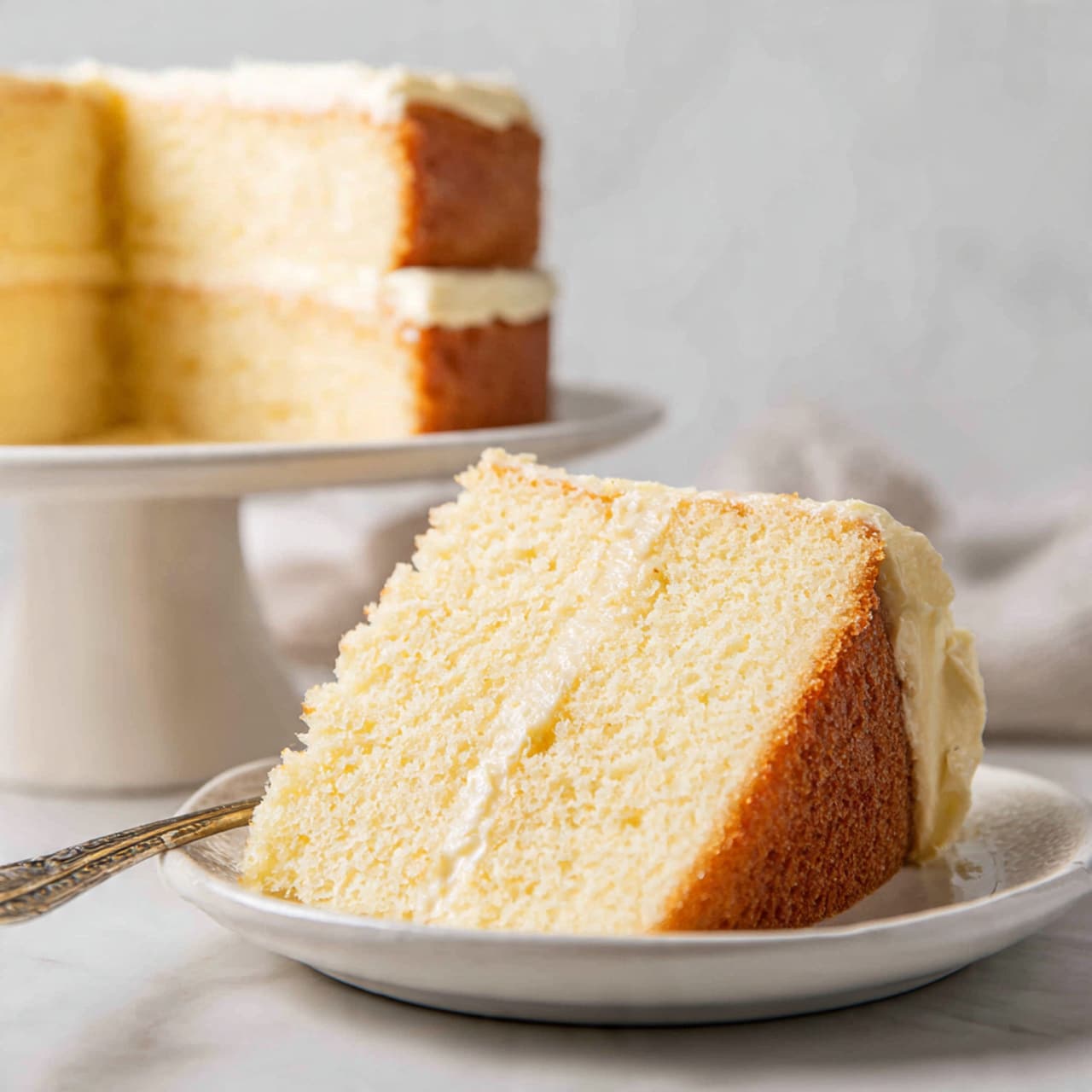
This vanilla cake is a classic buttery yellow cake with a soft, plush crumb and a clean vanilla flavor. Thanks to a whipped-egg method and a hot milk-butter technique, it bakes up light, even, and bakery-style—then stays surprisingly moist for days, whether you serve it plain or generously frosted.
Why You’ll Love This Recipe
It stays moist and tender for up to 4 days, making it perfect for baking ahead.
The crumb is fluffy and even, without dense patches or big tunnels.
The flavor is balanced: buttery and vanilla-forward, not overly sweet.
It bakes up flat and neat, so it’s excellent for layered cakes.
The batter also works beautifully for cupcakes and sheet cakes.
Ingredients
(Tip: You’ll find the full list of ingredients and measurements in the recipe card below.)
Vanilla Cake
2 cups plain / all-purpose flour (260 g)
2 1/2 teaspoons baking powder
1/4 teaspoon fine salt
4 large eggs, room temperature
1 1/2 cups caster (superfine) sugar (300 g)
1/2 cup unsalted butter (115 g), cut into small cubes
1 cup whole milk (240 ml)
3 teaspoons vanilla extract
3 teaspoons vegetable or canola oil
Vanilla Buttercream
1 cup unsalted butter (225 g), softened
4 cups powdered sugar (500 g), sifted
3 teaspoons vanilla extract
2 to 4 tablespoons milk (30 to 60 ml), as needed
Directions
Prep the oven and pans
Preheat the oven to 180°C / 350°F (160°C fan). Grease two 20 cm / 8-inch round cake pans and line the bases with parchment paper.
Mix the dry ingredients
In a bowl, whisk together the flour, baking powder, and salt. Set aside.
Whip eggs and sugar
In a stand mixer with a whisk attachment (or using a hand mixer), beat the eggs on medium-high for 30 seconds. With the mixer running, slowly pour in the sugar over about 45 seconds. Then beat on high for 7 minutes until very thick, pale, glossy, and tripled in volume.
Add dry ingredients gently
Add the flour mixture in 3 additions, mixing on low speed for just a few seconds each time—only until the flour is barely incorporated. Stop as soon as you don’t see dry flour.
Heat the milk and butter
While the eggs are whipping (or right after), heat the milk and butter together until the butter melts and the milk is hot (microwave or stovetop). Do not boil.
Temper and combine
Stir the vanilla extract and oil into the hot milk-butter mixture. Add about 1 1/2 cups of the whipped batter into the hot milk mixture and whisk until smooth and foamy.
With the mixer on low speed, slowly pour the milk mixture back into the main batter over about 15–20 seconds. Turn off, scrape the bowl, then mix on low for 10 seconds until smooth.
Bake
Divide batter evenly between pans. Tap each pan on the counter 3 times to pop large bubbles. Bake about 30 minutes, or until golden and a toothpick inserted in the center comes out clean.
Cool
Cool in pans for 15 minutes, then turn out onto racks. For flatter layers, cool upside down; otherwise cool right-side up.
Make the buttercream
Beat softened butter for 3 minutes until very pale and fluffy. Add powdered sugar in 3 additions, mixing slowly at first, then beating well. Add vanilla and enough milk to reach a creamy, spreadable consistency.
Frost and serve
Once the cake is fully cool, frost as desired and slice.
Servings and timing
Servings: 10 to 12 slices
Prep time: 20 minutes
Bake time: 28 to 35 minutes
Cooling time: 60 to 90 minutes (before frosting)
Total time: about 2 hours
Variations
Cupcakes: Use the same batter and bake in lined muffin tins until a toothpick comes out clean (start checking around 18–22 minutes).
Sheet cake: Bake in a 23 x 33 cm / 9 x 13-inch pan; bake time is similar, start checking around 28 minutes.
Victoria-style finish: Spread strawberry jam between layers and top with lightly sweetened vanilla whipped cream, then dust with powdered sugar.
Lemon-vanilla twist: Add 1 tablespoon finely grated lemon zest to the sugar before whipping with the eggs.
Celebration look: Tint the buttercream with a small amount of food coloring, or cover with sprinkles.
Storage/Reheating
Room temperature (best for texture): Store unfrosted layers well-wrapped in an airtight container up to 4 days. Frosted cake can also sit at room temperature for 2–3 days if your kitchen isn’t hot.
Refrigerator: If it’s warm where you live, refrigerate the frosted cake. Bring slices to room temperature before serving for the softest crumb and creamiest frosting.
Freezer: Wrap unfrosted layers tightly (plastic wrap plus a freezer bag) and freeze up to 3 months. Thaw overnight at room temperature, still wrapped, before frosting.
Reheating: This cake is best not heated. If you want it slightly warm, microwave a slice for 5–8 seconds—just enough to take the chill off.
FAQs
How do I know when I’ve whipped the eggs enough?
The mixture should turn very pale, become thick and glossy, and fall in ribbons that sit briefly on the surface before sinking.
Can I use regular granulated sugar instead of caster sugar?
Yes. Granulated sugar works, though it may dissolve slightly less smoothly. The cake will still turn out well.
Why does the recipe use hot milk and melted butter?
Hot milk helps the cake rise well and keeps the crumb tender. Mixing a bit of batter into the hot liquid first prevents it from deflating the whipped eggs.
Can I use cake flour instead of all-purpose flour?
You can, but all-purpose flour gives excellent flavor and a very plush crumb in this specific recipe.
What if my cake turns out dense?
The most common causes are under-whipping the eggs, over-mixing after adding flour, or letting the batter sit too long before baking.
Can I bake all the batter in one deep pan?
It’s not recommended because it may not rise as well. Two pans (or a tube/bundt pan) give more reliable lift.
How do I keep the cake from sticking to the pan?
Grease well and line the base with parchment paper. If your pan tends to stick, you can also lightly flour the greased sides.
Can I make this cake in advance for an event?
Yes—this is one of the best cakes for making ahead. Bake 1–2 days in advance, wrap well, and frost the day of (or the day before).
How do I get smooth buttercream that’s not too sweet?
Sift the powdered sugar, beat long enough to make it fluffy, and add milk gradually for a lighter texture. A pinch of salt can also balance sweetness.
Can I add chocolate chips or fruit to the batter?
It’s better to avoid heavy mix-ins because they can sink and weigh down the crumb. If you want fruit, serve with berries on top or between layers instead.
Conclusion
This vanilla cake is made to be dependable: soft, fluffy, evenly crumbed, and wonderfully moist for days. Bake it for birthdays, layer it for celebrations, keep it simple with powdered sugar, or go all-in with vanilla buttercream—either way, it’s the kind of classic cake you’ll come back to again and again.
A buttery, soft, and fluffy vanilla cake with a plush crumb that stays moist for up to 4 days. Ideal for birthdays, celebrations, or any occasion, this reliable recipe uses a whipped egg technique and hot milk method for a bakery-style finish.
Ingredients
2 cups all-purpose flour (260 g)
2 1/2 teaspoons baking powder
1/4 teaspoon fine salt
4 large eggs, room temperature
1 1/2 cups caster (superfine) sugar (300 g)
1/2 cup unsalted butter (115 g), cubed
1 cup whole milk (240 ml)
3 teaspoons vanilla extract
3 teaspoons vegetable or canola oil
1 cup unsalted butter (225 g), softened (for buttercream)
4 cups powdered sugar (500 g), sifted
3 teaspoons vanilla extract (for buttercream)
2 to 4 tablespoons milk (30 to 60 ml), as needed
Instructions
Preheat oven to 180°C / 350°F (160°C fan). Grease and line two 20 cm / 8-inch round cake pans.
Whisk together flour, baking powder, and salt. Set aside.
In a stand mixer, beat eggs for 30 seconds, then gradually add sugar. Beat on high for 7 minutes until thick and pale.
Add flour mixture in 3 parts on low speed, mixing just until incorporated.
Meanwhile, heat milk and butter until melted and hot. Stir in vanilla and oil.
Whisk about 1 1/2 cups of batter into the hot milk mixture until foamy. Slowly pour this into the main batter while mixing on low speed. Mix briefly until smooth.
Divide batter between pans, tap on counter to remove air bubbles. Bake for 28–35 minutes until a toothpick comes out clean.
Cool cakes in pans for 15 minutes, then transfer to racks to cool completely.
For the buttercream: beat butter for 3 minutes until pale and fluffy. Gradually add powdered sugar. Add vanilla and enough milk to reach a creamy consistency.
Frost cooled cake as desired and slice to serve.
Notes
Store cake layers wrapped at room temp for up to 4 days.
Add lemon zest to the sugar for a citrus twist.
Tint the buttercream or decorate with sprinkles for celebrations.
Great for cupcakes and sheet cakes with adjusted bake times.
Don’t overmix after adding flour to avoid a dense crumb.