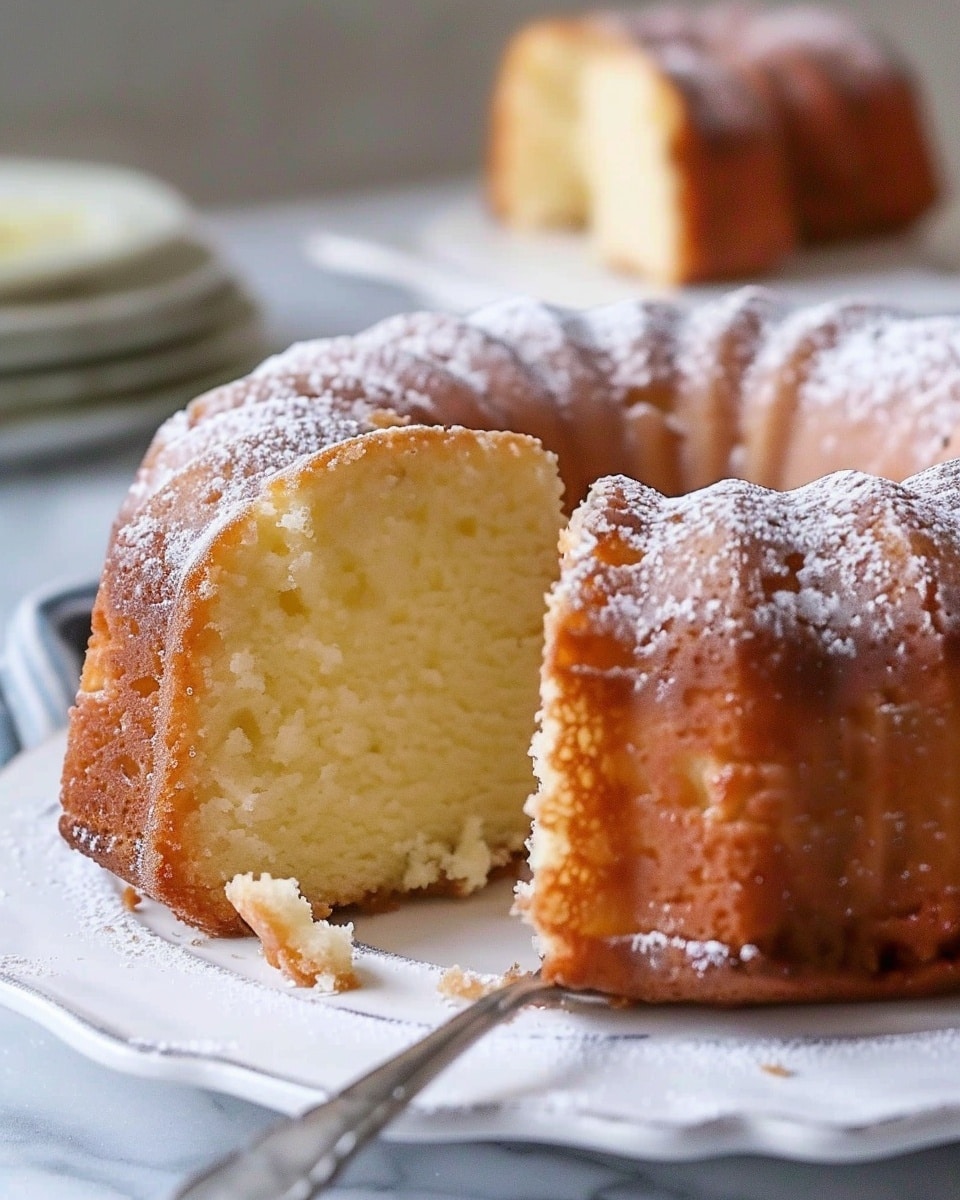
This is the kind of old-school, comfort dessert that feels like it came from a family table where someone always said, “Just one more slice.” It’s a tender vanilla Bundt cake with a fine, buttery crumb—then it gets drenched with a warm butter-sugar sauce that sinks into every nook, leaving the cake glossy, rich, and unbelievably moist.
Why You’ll Love This Recipe
The texture is plush and tight like a perfect pound cake, but never dry.
The warm butter sauce soaks in and turns a simple vanilla cake into something unforgettable.
It’s made with everyday pantry ingredients and a straightforward method.
The flavor gets even better after a few hours (or the next day), making it ideal for baking ahead.
It’s elegant enough for guests, easy enough for a regular weekend.
Ingredients
(Tip: You’ll find the full list of ingredients and measurements in the recipe card below.)
For the cake
340 g unsalted butter, softened (1 1/2 cups)
400 g granulated sugar (2 cups)
4 large eggs, room temperature
2 teaspoons vanilla extract
360 g all-purpose flour (3 cups)
1 teaspoon baking powder
1/2 teaspoon fine salt
240 ml buttermilk, room temperature (1 cup)
For greasing the pan
1 tablespoon softened butter
1 tablespoon all-purpose flour
For the butter soaking sauce
170 g granulated sugar (3/4 cup + 2 tablespoons)
80 ml water (1/3 cup)
115 g unsalted butter (1/2 cup)
1 1/2 teaspoons vanilla extract
1/4 teaspoon fine salt
Directions
Prepare the oven and pan
Heat the oven to 325°F (165°C). Generously butter a 10–12 cup Bundt pan, then dust it with flour. Tap out the excess. This step matters—Bundt cakes like to cling.
Mix the dry ingredients
In a bowl, whisk together the flour, baking powder, and salt. Set aside.
Cream butter and sugar
In a large mixing bowl, beat the softened butter and sugar for 3–5 minutes, until very pale and fluffy. Don’t rush this; it builds the cake’s fine, tender crumb.
Add eggs and vanilla
Beat in the eggs one at a time, mixing well after each addition. Stir in the vanilla extract.
Alternate dry ingredients and buttermilk
Add the flour mixture in three additions, alternating with the buttermilk in two additions. Mix just until combined each time. Stop as soon as the batter looks smooth and thick—overmixing makes the cake heavier.
Bake
Spoon the batter into the prepared pan and smooth the top. Bake for 55–65 minutes, until a skewer inserted comes out clean or with a few moist crumbs (not wet batter).
Make the butter sauce while the cake bakes
In a saucepan over medium heat, combine sugar and water. Stir until the sugar dissolves, then add butter. Once melted, let it gently simmer for 2–3 minutes, stirring often. Remove from heat and stir in vanilla and salt.
Soak the warm cake
When the cake comes out of the oven, keep it in the pan. Use a skewer to poke deep holes all over the cake (aim for 40–60 pokes). Slowly pour about half of the warm sauce over the cake, letting it sink in. Wait 10 minutes, then pour the remaining sauce over the top, again slowly.
Cool and unmold
Let the cake cool in the pan for 30–40 minutes. Then invert onto a plate. If you can, let it rest another 30 minutes before slicing so the sauce fully settles into the crumb.
Servings and timing
Servings: 12–16 slices (depending on how generous you cut)
Timing
Prep time: 20 minutes
Bake time: 55–65 minutes
Sauce time: 10 minutes
Cooling time before slicing: 60–90 minutes
Total time: about 1 hour 30 minutes to 2 hours (including cooling)
Variations
Salted caramel twist: Replace the sauce with 180 ml caramel sauce (3/4 cup) warmed with 60 g butter (4 tablespoons) and 1/2 teaspoon salt. Pour it over the cake the same way while warm.
Citrus butter cake: Add 2 teaspoons finely grated lemon or orange zest to the sugar before creaming, and add 1 tablespoon citrus juice to the sauce off heat.
Nutty version: Sprinkle 80 g chopped toasted pecans (about 3/4 cup) into the bottom of the Bundt pan before adding batter, or fold them into the batter.
Extra vanilla depth: Use 1 tablespoon vanilla extract in the cake and 2 teaspoons in the sauce for a bakery-style aroma.
Spiced warmth: Add 1 teaspoon cinnamon to the flour mixture for a cozy, lightly spiced crumb.
Storage/Reheating
Storage
Room temperature: Store tightly covered for up to 3 days.
Refrigerator: Store covered for up to 5–6 days (the cake will be firmer when chilled).
Freezer: Wrap slices or the whole cake tightly in plastic wrap, then foil. Freeze up to 2 months. Thaw overnight in the refrigerator or at room temperature.
Reheating
Slice-by-slice: Warm a slice for 10–15 seconds in the microwave to bring back that soft, buttery feel.
For a just-baked vibe: Warm slices in a 300°F (150°C) oven for about 8–10 minutes, covered loosely with foil so they don’t dry out.
FAQs
Why do I have to poke holes in the cake?
The holes act like little tunnels so the warm butter sauce can soak deep into the crumb instead of sitting on the surface.
Can I use a loaf pan instead of a Bundt pan?
Yes. Use two 9×5-inch loaf pans. Start checking around 45–55 minutes, since bake time can vary by pan and oven.
What if I don’t have buttermilk?
Make a quick substitute: mix 240 ml milk (1 cup) with 1 tablespoon lemon juice or vinegar. Let it sit 5 minutes, then use.
How do I keep the cake from sticking to the Bundt pan?
Grease every curve, then flour it well. Also let the cake cool 30–40 minutes before unmolding—too hot and it can tear, too cold and it can stick.
Can I make this cake ahead for an event?
Absolutely. It’s even better after a few hours. Bake it the day before, keep it covered, and slice when you’re ready.
My cake came out dry—what went wrong?
Most often it’s overbaking or measuring too much flour. Spoon flour into the measuring cup and level it, and pull the cake as soon as the tester is clean or has moist crumbs.
Can I reduce the sugar?
You can reduce the cake sugar slightly (try 350 g instead of 400 g), but keep the sauce as written for the classic Kentucky Butter Cake effect.
Can I use salted butter?
Yes. If you do, reduce the added salt in the cake to 1/4 teaspoon and in the sauce to a small pinch.
Why did my sauce get grainy?
That usually happens if the sugar didn’t fully dissolve or if the sauce was cooked too hot. Keep it at a gentle simmer and stir until smooth.
What’s the best way to serve it?
Slice it thick and serve plain, or add a spoon of extra warm sauce on the side. It pairs beautifully with tea, coffee, or a simple scoop of vanilla-style ice cream.
Conclusion
Kentucky Butter Cake is proof that the simplest flavors can feel the most luxurious when you treat them right: cream the butter well, bake it gently, and pour that warm butter sauce while the cake is still welcoming it in. The result is rich, tender, and deeply comforting—one of those cakes that disappears quietly slice by slice until you’re left staring at crumbs and wishing you’d made two.
Kentucky Butter Cake is a classic vanilla Bundt cake with a fine, buttery crumb, soaked with a warm butter-sugar sauce that seeps into every bite, making it glossy, rich, and incredibly moist.
Ingredients
For the cake: 340 g unsalted butter, softened (1 1/2 cups)
For the cake: 400 g granulated sugar (2 cups)
For the cake: 4 large eggs, room temperature
For the cake: 2 teaspoons vanilla extract
For the cake: 360 g all-purpose flour (3 cups)
For the cake: 1 teaspoon baking powder
For the cake: 1/2 teaspoon fine salt
For the cake: 240 ml buttermilk, room temperature (1 cup)
For greasing the pan: 1 tablespoon softened butter
For greasing the pan: 1 tablespoon all-purpose flour
For the butter soaking sauce: 170 g granulated sugar (3/4 cup + 2 tablespoons)
For the butter soaking sauce: 80 ml water (1/3 cup)
For the butter soaking sauce: 115 g unsalted butter (1/2 cup)
For the butter soaking sauce: 1 1/2 teaspoons vanilla extract
For the butter soaking sauce: 1/4 teaspoon fine salt
Instructions
Preheat and prepare pan: Heat oven to 325°F (165°C). Generously butter a 10–12 cup Bundt pan, dust with flour, and tap out excess.
Mix dry ingredients: Whisk flour, baking powder, and salt in a bowl. Set aside.
Cream butter and sugar: In a large mixing bowl, beat softened butter and sugar for 3–5 minutes until very pale and fluffy.
Add eggs and vanilla: Beat in eggs one at a time, mixing well after each. Stir in vanilla extract.
Alternate flour and buttermilk: Add dry ingredients in 3 additions, alternating with buttermilk in 2 additions. Mix just until combined each time (do not overmix).
Bake: Spoon batter into prepared pan and smooth the top. Bake 55–65 minutes, until a skewer comes out clean or with a few moist crumbs.
Make the butter sauce: In a saucepan over medium heat, stir sugar and water until sugar dissolves. Add butter and melt. Simmer gently 2–3 minutes, stirring often. Remove from heat and stir in vanilla and salt.
Soak the cake: Keep cake in the pan. Poke deep holes all over the warm cake (about 40–60). Slowly pour about half the warm sauce over the cake. Wait 10 minutes, then slowly pour remaining sauce over the top.
Cool and unmold: Cool in the pan 30–40 minutes, then invert onto a plate. Rest another ~30 minutes before slicing for best texture.
Notes
Poking holes helps the warm sauce soak deep into the cake instead of sitting on top.
For a buttermilk substitute: mix 1 cup (240 ml) milk with 1 tablespoon lemon juice or vinegar; rest 5 minutes before using.
To avoid dryness: measure flour accurately (spoon and level) and remove cake as soon as the tester is clean or has moist crumbs.
If using salted butter, reduce cake salt to 1/4 teaspoon and sauce salt to a small pinch.
Loaf pan option: bake in two 9×5-inch loaf pans; start checking at 45–55 minutes.
Storage: keep tightly covered at room temp up to 3 days, refrigerate up to 5–6 days, or freeze (well-wrapped) up to 2 months.
Reheat: microwave a slice 10–15 seconds, or warm covered in a 300°F (150°C) oven for 8–10 minutes.
Variations: add 2 tsp citrus zest to sugar; fold in or layer 3/4 cup (80 g) toasted pecans; add 1 tsp cinnamon to flour; boost vanilla for deeper flavor.