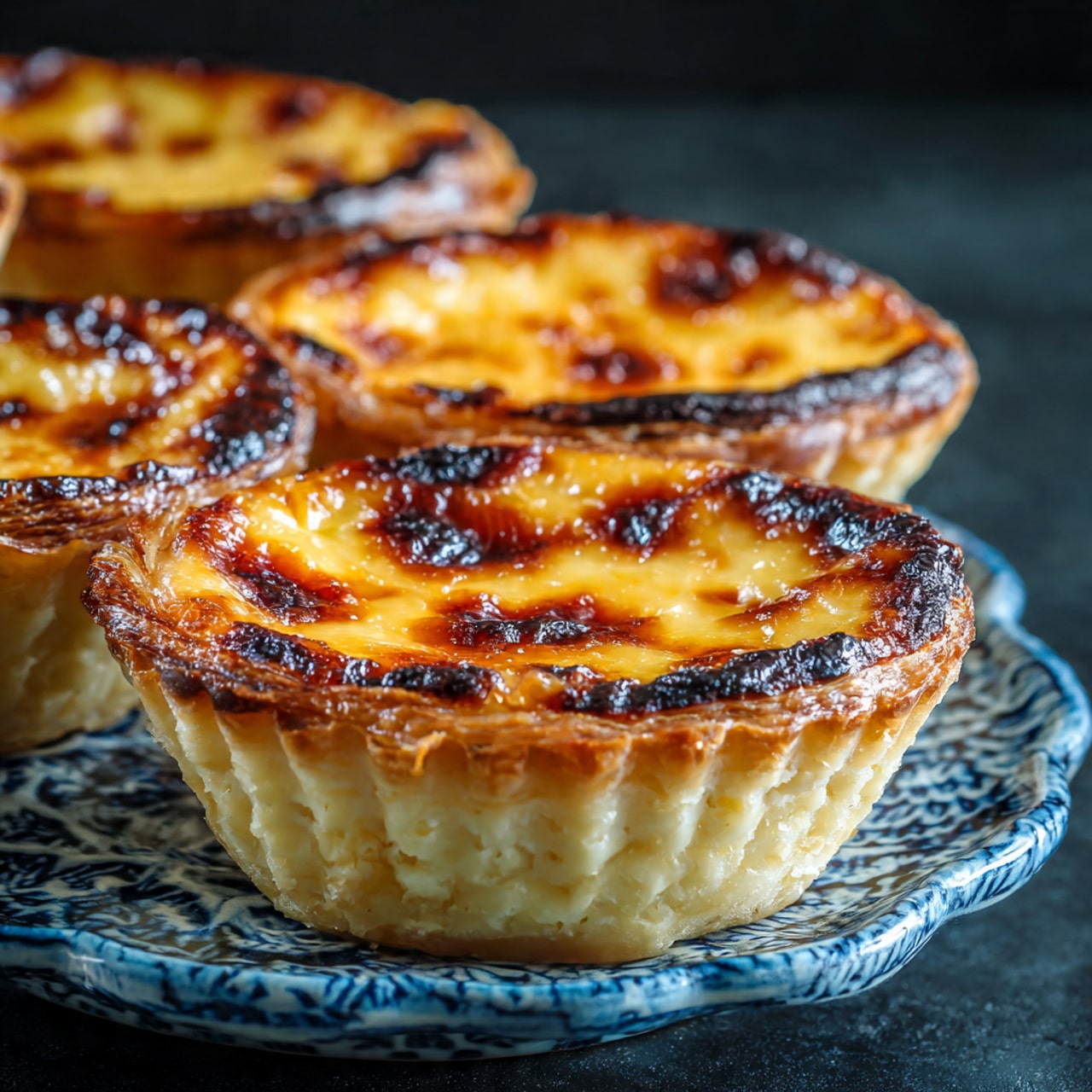
These classic Portuguese custard tarts feature ultra-crispy puff pastry filled with a silky, lemon-scented cream that caramelizes beautifully on top. Baked at high heat, they deliver a contrast of textures and flavors that makes them unforgettable.
Why You’ll Love This Recipe
This recipe stays true to the traditional flavor and texture of authentic pastéis de nata. The custard is rich without being heavy, gently perfumed with lemon zest, and balanced by the shattering crispness of buttery puff pastry. It is surprisingly simple to prepare at home and perfect for both special occasions and everyday treats.
Ingredients
(Tip: You’ll find the full list of ingredients and measurements in the recipe card below.)
For the pastry base
1 sheet pure butter puff pastry, about 250 g, thawed if frozen
For the custard filling
250 ml whole milk
200 ml full-fat liquid cream
150 g granulated sugar
30 g all-purpose flour
4 large egg yolks
Fine zest of 1 untreated lemon
1 pinch fine salt
Directions
Prepare the pastry. Lightly flour your work surface and roll the puff pastry into a tight log from the short side. Cut the log into 10 to 12 equal slices.
Shape the shells. Place each slice cut-side up into a muffin tin. Using slightly damp thumbs, press the pastry from the center outward to line the bottom and sides, forming thin, even shells. Chill the tin in the refrigerator for 30 minutes.
Heat the milk. In a saucepan, combine the whole milk, lemon zest, and salt. Heat over medium heat until steaming but not boiling. Remove from heat.
Make the custard base. In a bowl, whisk the sugar and flour until well combined. Gradually whisk in the liquid cream until smooth.
Combine. Slowly pour the warm milk into the cream mixture while whisking continuously to avoid lumps.
Cook the custard. Return the mixture to the saucepan and cook over medium heat, stirring constantly, until it thickens to a smooth, creamy consistency.
Add egg yolks. Remove from heat and let cool for 2 to 3 minutes. Whisk in the egg yolks until fully incorporated.
Fill and bake. Preheat the oven to 240°C. Pour the custard into the chilled pastry shells, filling each about three-quarters full. Bake for 15 to 18 minutes, until the tops are deeply golden with dark caramelized spots.
Cool slightly. Remove from the oven and let the tarts rest for a few minutes before unmolding.
Servings and timing
Servings: 10 to 12 tarts
Preparation time: 30 minutes
Resting time: 30 minutes
Cooking time: 15 to 18 minutes
Total time: about 1 hour 15 minutes
Variations
You can add a small cinnamon stick to the milk while heating for a warm spice note. For a slightly richer custard, replace 50 ml of the milk with additional cream. A light dusting of cinnamon or powdered sugar just before serving is also a traditional option.
Storage/Reheating
Pastéis de nata are best enjoyed fresh on the day they are baked. Leftovers can be stored in an airtight container at room temperature for up to 1 day or refrigerated for up to 2 days. To reheat, place them in a hot oven at 220°C for 5 to 7 minutes to restore the crisp pastry.
FAQs
Can I use store-bought puff pastry?
Yes, good quality pure butter puff pastry works very well and saves time.
Why is my custard runny?
The custard likely did not cook long enough on the stovetop. It should be thick before adding the egg yolks.
Do I need a special pan?
A standard non-stick muffin tin is sufficient for this recipe.
Can I make the custard ahead of time?
Yes, you can prepare the custard up to one day in advance and keep it refrigerated until ready to use.
Why is high oven temperature important?
The very hot oven creates the signature caramelized top while keeping the custard creamy.
Can I freeze pastéis de nata?
They can be frozen after baking, but the texture is best when freshly made.
What makes the top dark and spotted?
The sugar in the custard caramelizes at high heat, creating the traditional dark spots.
Can I reduce the sugar?
You can slightly reduce it, but too little sugar will affect both flavor and caramelization.
Is lemon zest necessary?
It is traditional and adds freshness, but you can omit it if preferred.
How do I know when they are done?
The pastry should be golden and crisp, and the custard should be set with dark caramelized patches on top.
Conclusion
Making pastéis de nata at home is a rewarding way to enjoy one of Portugal’s most beloved desserts. With crisp pastry, creamy custard, and a beautifully caramelized finish, these tarts are sure to impress and quickly become a favorite.
These authentic Portuguese custard tarts (Pastéis de Nata) feature ultra-crispy puff pastry filled with silky, lemon-scented custard, caramelized to perfection. A simple yet indulgent treat with rich texture and traditional flavor.
Ingredients
1 sheet pure butter puff pastry (about 250 g), thawed if frozen
250 ml whole milk
200 ml full-fat liquid cream
150 g granulated sugar
30 g all-purpose flour
4 large egg yolks
Fine zest of 1 untreated lemon
1 pinch fine salt
Instructions
Lightly flour your work surface and roll the puff pastry into a tight log from the short side. Cut into 10–12 slices.
Place each slice cut-side up in a muffin tin. Use damp thumbs to press the pastry from the center outward to form thin, even shells. Chill for 30 minutes.
In a saucepan, combine milk, lemon zest, and salt. Heat over medium until steaming but not boiling. Remove from heat.
In a bowl, whisk sugar and flour, then gradually whisk in the cream until smooth.
Slowly pour warm milk into the cream mixture while whisking to avoid lumps.
Return mixture to saucepan. Cook over medium heat, stirring constantly, until thickened and creamy.
Remove from heat and let cool slightly (2–3 minutes). Whisk in egg yolks until fully incorporated.
Preheat oven to 240°C (465°F). Pour custard into chilled pastry shells, filling about 3/4 full.
Bake for 15–18 minutes until tops are golden with dark caramelized spots.
Cool slightly before unmolding and serving.
Notes
Add a cinnamon stick to the milk for a spiced version.
Dust finished tarts with cinnamon or powdered sugar if desired.
Replace 50 ml of milk with cream for a richer custard.
Best enjoyed fresh; reheat in oven to restore crispness.