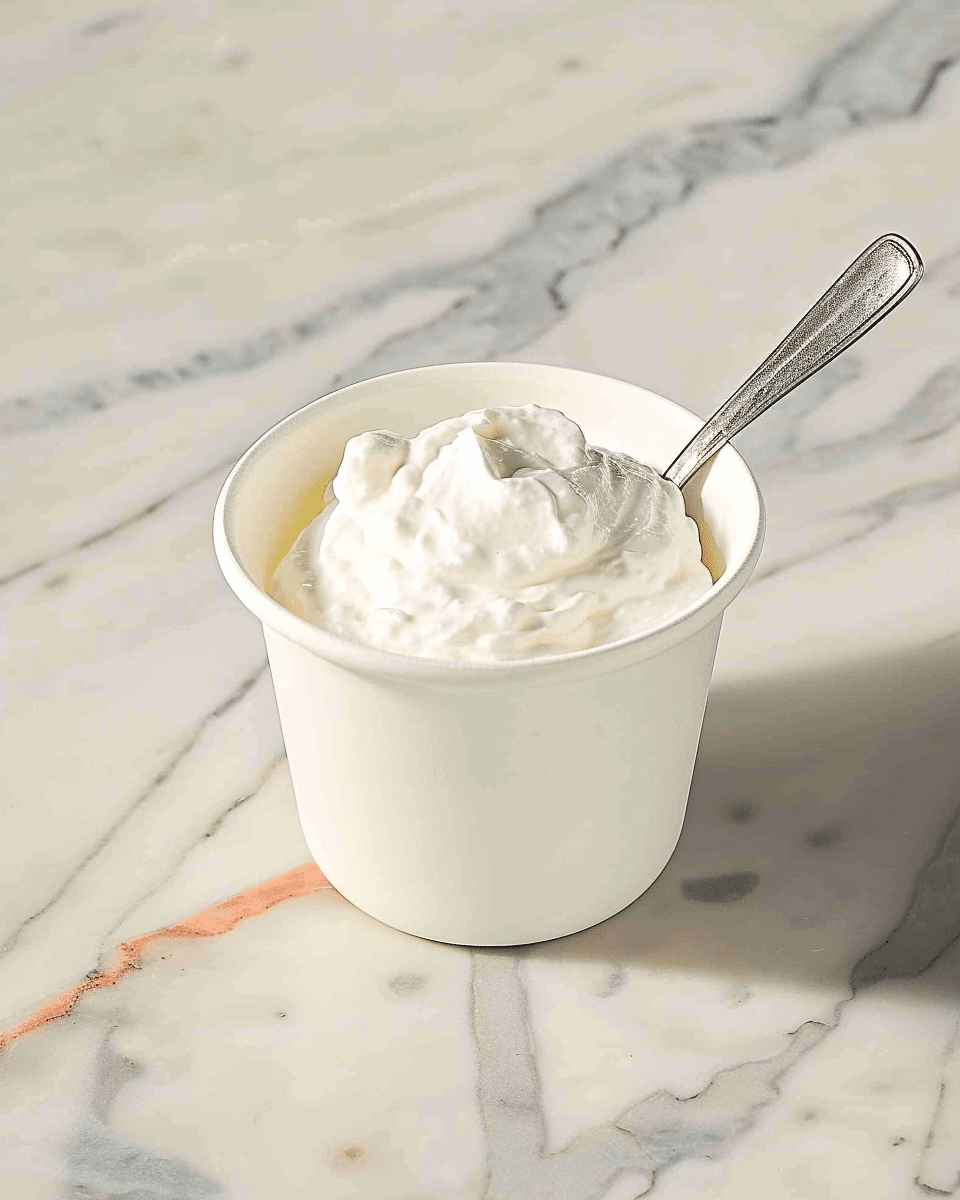
Homemade Greek yogurt is incredibly creamy, naturally rich in protein, and far more economical than store-bought versions. With just milk and a spoonful of yogurt as your starter, you can create a wonderfully thick, tangy yogurt that’s perfect for breakfasts, dips, marinades, and countless Mediterranean dishes.
Why You’ll Love This Recipe
Making Greek yogurt at home gives you full control over the flavor and texture. It requires no special equipment—just a pot, a thermometer, and a strainer. The result is a fresh, wholesome yogurt that’s thicker and more flavorful than most commercial brands. You can enjoy it plain, swirl in fruit or honey, use it in savory recipes, or strain it even further to make labneh.
Ingredients
(Tip: You’ll find the full list of ingredients and measurements in the recipe card below.)
1/2 gallon whole or 2% milk (8 cups)
1/4 cup plain yogurt with live active cultures, at room temperature
Directions
Heat the milk: Rinse the inside of a heavy 3- to 4-quart pot with cold water to prevent scorching. Add the milk and set over medium heat. Bring to a gentle simmer, stirring occasionally. Once the milk reaches 190°F to 200°F and small bubbles form around the edges, remove from the heat.
Cool the milk: Allow the milk to cool to between 105°F and 115°F, stirring occasionally. If it cools too much, gently rewarm. Meanwhile, let your starter yogurt come to room temperature in a small bowl.
Incorporate the starter: Add 1/2 cup of the warm milk to the yogurt and mix to thin it out. Stir this mixture back into the pot of warm milk to distribute the cultures evenly.
Incubate the mixture: Cover the pot and place it in a warm, draft-free spot. Leave undisturbed for 6–10 hours until set.
Chill the yogurt: Transfer the pot to the refrigerator without stirring. Chill for at least 6 hours and up to 2 days to develop flavor and thickness.
Strain the yogurt: Line a fine-mesh strainer or colander with cheesecloth and set it over a large bowl. Spoon the yogurt into the strainer and refrigerate for 2–8 hours, depending on how thick you like it.
Store and enjoy: Transfer the thickened yogurt to airtight containers. Refrigerate for up to 2 weeks.
Servings and timing
This recipe yields about 4 cups of Greek yogurt after straining (from 8 cups of milk).
Active time: 20 minutes
Incubation time: 6–10 hours
Chilling time: 6 hours to 2 days
Straining time: 2–8 hours
Variations
Regular (unstrained) yogurt: Skip the straining step for a looser, classic yogurt texture.
Sweeter yogurt: After the yogurt is fully made, stir in honey, date syrup, or jam.
Fruit yogurt: Mix in chopped fresh fruit or a fruit compote.
Thicker yogurt: Strain longer until reaching a spreadable consistency.
Storage/Reheating
Refrigeration: Store homemade Greek yogurt in airtight containers for up to 2 weeks.
Freezing: Yogurt can be frozen for up to 2 months, though the texture may become grainy.
Using as a starter: Save 1/4 cup of your homemade yogurt to use as the starter for your next batch. Use within 1 week for best culture strength.
Reheating: Yogurt should not be reheated, as heat destroys the cultures. If using in hot dishes like soups, temper it slowly by whisking in a small amount of warm liquid before adding it to the dish.
FAQs
How do I know if my yogurt has set properly?
It should look thickened and no longer liquid. It may have slight whey separation, which is normal.
Why did my yogurt turn out runny?
The incubation temperature may have been too low, or the milk may have been too hot when the starter was added, killing the cultures.
Can I use homemade yogurt as a starter for the next batch?
Yes, as long as it’s used within a week so the cultures remain active.
Can I use skim milk?
You can, but the yogurt will be noticeably thinner.
What type of yogurt should I use as a starter?
Plain yogurt with live active cultures. Avoid flavored or sweetened varieties.
Do I need special equipment?
No. A heavy pot, thermometer, and strainer with cheesecloth are sufficient.
What should I do if my yogurt is too sour?
It incubated for too long. Use it in marinades or reduce the incubation time next time.
How can I speed up the cooling of the milk?
Place the pot in an ice bath and stir until it reaches 105°F–115°F.
Can I strain the yogurt longer for extra thickness?
Yes. Longer straining results in a thicker, almost spreadable yogurt similar to labneh.
Why heat the milk if it’s already pasteurized?
Heating improves yogurt texture by altering milk proteins and ensures ideal fermentation conditions.
Conclusion
Homemade Greek yogurt is simple, economical, and wonderfully versatile. With just two basic ingredients and a bit of patience, you can enjoy a rich, creamy yogurt that enhances both sweet and savory dishes. Once you experience how delicious and customizable homemade Greek yogurt is, it will easily become a staple in your kitchen.
Homemade Greek yogurt is a rich, creamy, protein-packed alternative to store-bought yogurt, made simply from milk and a spoonful of yogurt starter. It’s versatile, cost-effective, and customizable for your taste and texture preferences.
Ingredients
1/2 gallon whole or 2% milk (8 cups)
1/4 cup plain yogurt with live active cultures, at room temperature
Instructions
Rinse the inside of a heavy 3- to 4-quart pot with cold water to help prevent milk from scorching. Add the milk and heat over medium heat, stirring occasionally, until it reaches 190°F to 200°F. Remove from heat.
Allow the milk to cool to 105°F to 115°F, stirring occasionally. If it cools too much, gently rewarm. Let your starter yogurt come to room temperature.
In a small bowl, mix 1/2 cup of the cooled milk with the plain yogurt until smooth. Stir this mixture back into the pot of warm milk.
Cover the pot and place it in a warm, draft-free spot. Incubate undisturbed for 6–10 hours until the yogurt has set.
Transfer the pot to the refrigerator without stirring. Chill for at least 6 hours and up to 2 days to allow flavor and thickness to develop.
Line a fine-mesh strainer or colander with cheesecloth and set it over a large bowl. Spoon the chilled yogurt into the strainer and refrigerate for 2–8 hours until desired thickness is reached.
Transfer the strained Greek yogurt into airtight containers and refrigerate for up to 2 weeks. Save 1/4 cup to use as a starter for the next batch within a week.
Notes
Use whole milk for the creamiest texture, or 2% for a lighter option.
Ensure your starter yogurt has live active cultures.
The longer the straining, the thicker the yogurt—perfect for making labneh.
If the yogurt turns out too sour, reduce the incubation time next time.
A thermometer helps ensure the milk and incubation temps are just right.