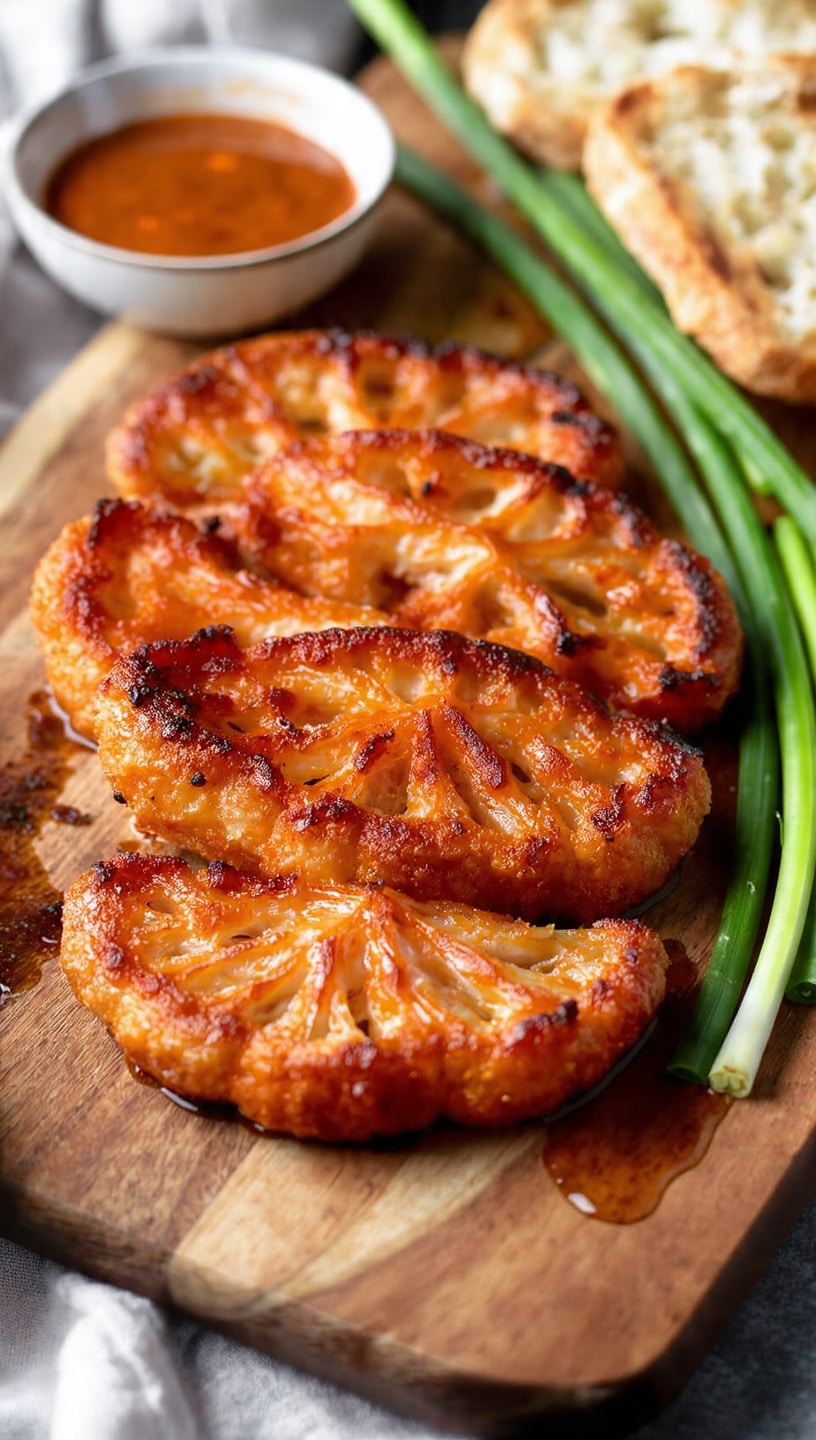
These gochujang cauliflower steaks are caramelised at the edges, meltingly tender in the middle, and coated in a glossy, fiery-savoury glaze. It’s a cosy, flavour-packed vegetarian main that feels just as right for an easy weeknight dinner as it does for an impressive dinner party centrepiece.
Why You’ll Love This Recipe
This recipe turns humble cauliflower into something truly special. The thick slices roast until golden and soft, then get braised in a sticky gochujang glaze that’s spicy, slightly sweet, and deeply savoury. It’s simple to make, naturally vegetarian, and packed with bold flavours that cling beautifully to the cauliflower. Plus, it’s versatile enough to serve on its own or alongside other hearty dishes.
Ingredients
(Tip: You’ll find the full list of ingredients and measurements in the recipe card below.)
For the cauliflower steaks
1 large head cauliflower
3 tablespoons olive oil
1 teaspoon smoked paprika
½ teaspoon fine sea salt
¼ teaspoon black pepper
For the gochujang glaze
1 tablespoon sesame oil
3 tablespoons gochujang paste
2 tablespoons soy sauce
1 tablespoon rice vinegar
1 teaspoon gochugaru (Korean chilli flakes), adjust to taste
1 tablespoon granulated sugar
3 tablespoons water
For serving (optional)
½ cup whipped tahini
1 tablespoon sesame seeds
2 scallions, finely sliced
Directions
Preheat the oven to 180°C. Line a baking tray with parchment paper.
Remove the outer leaves from the cauliflower and trim the stem just enough so it can sit flat. Slice the cauliflower from top to bottom into thick steaks, about 2–2.5 cm thick. You should get 3 to 4 good steaks; any loose florets can be roasted alongside.
In a small bowl, whisk together the olive oil, smoked paprika, salt, and black pepper. Brush this mixture generously over both sides of the cauliflower steaks.
Arrange the cauliflower on the prepared tray and roast for 20 minutes. Carefully flip the steaks and roast for another 15–20 minutes, until golden on the outside and tender all the way through.
While the cauliflower is roasting, make the glaze. Heat the sesame oil in a wide pan over medium heat. Add the gochujang, soy sauce, rice vinegar, gochugaru, sugar, and water. Stir until smooth.
Let the sauce simmer gently for 3–5 minutes, stirring often, until thickened and glossy. Taste and adjust seasoning if needed.
Add the roasted cauliflower steaks to the pan. Gently flip and spoon the sauce over them until fully coated and sticky.
Serve the steaks as they are, or over a bed of whipped tahini. Garnish with sesame seeds and sliced scallions before serving.
Servings and timing
Servings: 2 to 3 as a main dish, 4 as a side
Prep time: 15 minutes
Cook time: 40 minutes
Total time: 55 minutes
Variations
You can make this recipe your own in several ways. Add a teaspoon of grated garlic or ginger to the glaze for extra depth. Swap sugar for honey or maple syrup for a different sweetness. For extra richness, finish the sauce with a small knob of butter. You can also serve the cauliflower over rice, noodles, or with roasted vegetables for a more filling meal.
Storage/Reheating
Store leftover cauliflower steaks in an airtight container in the refrigerator for up to 3 days. To reheat, warm gently in a pan over low heat, adding a splash of water to loosen the glaze, or reheat in the oven at 170°C until heated through. Avoid microwaving if possible, as it can make the cauliflower soft and watery.
FAQs
Can I make this recipe vegan?
Yes, this recipe is naturally vegan as written, as long as your gochujang and soy sauce are vegan-friendly.
What if my cauliflower falls apart when slicing?
That’s normal. Use the intact steaks for serving and roast any loose florets alongside them. They taste just as good coated in the glaze.
Is gochujang very spicy?
Gochujang has a medium heat with sweetness and umami. You can reduce the amount or skip the gochugaru if you prefer it milder.
Can I prepare this in advance?
You can roast the cauliflower and prepare the glaze up to one day ahead. Store separately and combine just before serving.
What can I serve with gochujang cauliflower steaks?
They pair well with rice, flatbreads, sautéed greens, or other roasted vegetables.
Can I use frozen cauliflower?
Fresh cauliflower works best for steaks. Frozen cauliflower is better suited for florets, as it won’t hold its shape when sliced.
How do I know when the cauliflower is done roasting?
The cauliflower should be golden brown on the outside and easily pierced with a knife in the centre.
Can I grill the cauliflower instead of roasting it?
Yes, you can grill the steaks over medium heat until tender, then finish them in the pan with the glaze.
What can I use instead of tahini?
You can serve the steaks with yoghurt, labneh, or a simple garlic sauce instead of tahini.
Does this recipe work for meal prep?
Yes, it reheats well and keeps its flavour, making it suitable for short-term meal prep.
Conclusion
Gochujang cauliflower steaks are proof that vegetables can be bold, comforting, and truly satisfying. With their caramelised edges, soft centre, and sticky, fiery glaze, they transform a simple ingredient into a standout dish you’ll want to make again and again. Whether for a cosy dinner at home or a special gathering, this recipe delivers flavour in every bite.
These gochujang cauliflower steaks are roasted until tender and caramelised, then coated in a sticky, spicy-savoury glaze made with gochujang, soy sauce, and sesame oil. A bold and satisfying vegetarian main perfect for weeknight dinners or special occasions.
Ingredients
1 large head cauliflower
3 tablespoons olive oil
1 teaspoon smoked paprika
½ teaspoon fine sea salt
¼ teaspoon black pepper
1 tablespoon sesame oil
3 tablespoons gochujang paste
2 tablespoons soy sauce
1 tablespoon rice vinegar
1 teaspoon gochugaru (Korean chilli flakes), adjust to taste
1 tablespoon granulated sugar
3 tablespoons water
½ cup whipped tahini (optional)
1 tablespoon sesame seeds (optional)
2 scallions, finely sliced (optional)
Instructions
Preheat the oven to 180°C (350°F). Line a baking tray with parchment paper.
Remove the outer leaves from the cauliflower and trim the stem so it sits flat. Slice into 2–2.5 cm thick steaks. You should get 3–4 steaks; loose florets can be roasted separately.
In a small bowl, whisk together olive oil, smoked paprika, salt, and black pepper. Brush over both sides of the cauliflower steaks.
Arrange on the prepared tray and roast for 20 minutes. Flip carefully and roast for another 15–20 minutes until golden and tender.
Meanwhile, heat sesame oil in a pan over medium heat. Add gochujang, soy sauce, rice vinegar, gochugaru, sugar, and water. Stir until smooth and simmer for 3–5 minutes until thickened and glossy.
Transfer roasted cauliflower steaks to the pan and gently coat with the glaze, spooning it over to fully cover.
Serve immediately, over whipped tahini if using. Garnish with sesame seeds and sliced scallions.
Notes
Add grated garlic or ginger to the glaze for extra depth.
Substitute sugar with honey or maple syrup if preferred.
Finish the glaze with a knob of butter for added richness.
Serve over rice, noodles, or alongside roasted vegetables.
Use remaining roasted florets as tasty sides or snacks.