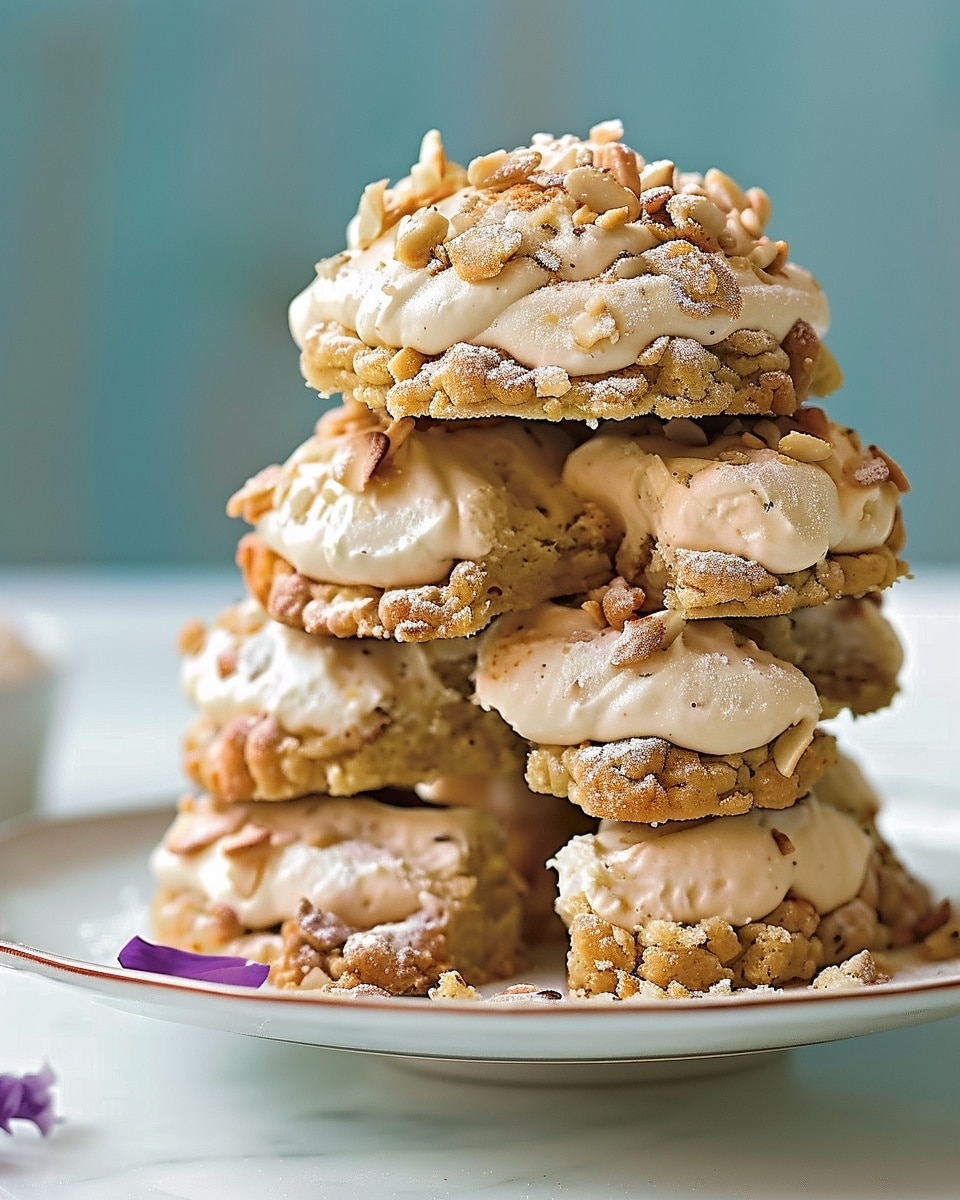
Egyptian Kahk el-Eid are delicate shortbread-style cookies traditionally prepared to celebrate Eid. These festive treats are known for their soft, buttery texture, beautiful stamped patterns, and sweet fillings such as dates, nuts, or honey mixtures. After baking, the cookies are generously dusted with powdered sugar, giving them their signature snowy appearance. Making kahk is often a family tradition, bringing people together in the kitchen to shape and decorate the cookies before the holiday.
Why You’ll Love This Recipe
These traditional Egyptian cookies are beloved for their rich flavor and festive charm. They combine buttery dough with warm spices and a sweet date filling that melts perfectly inside each cookie.
You’ll love this recipe because it brings authentic holiday flavors right to your kitchen. The cookies are soft, crumbly, and aromatic, making them perfect for sharing with family and guests during special celebrations. Their decorative patterns also make them visually appealing, while the powdered sugar coating adds a delightful sweetness.
Another reason this recipe stands out is its versatility. While date filling is classic, the dough itself is wonderfully flavorful and can be used with different fillings or even enjoyed plain.
Ingredients
(Tip: You’ll find the full list of ingredients and measurements in the recipe card below.)
Prepare the date filling. Finely chop the dates and place them in a small saucepan with the ghee and cinnamon. Cook over low heat, stirring until the dates soften and form a paste. Remove from heat and let cool.
Make the dough. In a large bowl, combine the flour, baking powder, salt, cinnamon, cardamom, nutmeg, and sesame seeds.
In another bowl, mix the ghee and powdered sugar until smooth and creamy.
Gradually add the dry ingredients to the ghee mixture, mixing until the mixture resembles crumbs.
Pour in the milk and mix gently until a soft dough forms.
Cover the dough and chill it in the refrigerator for about 30 minutes.
Preheat the oven to 180°C (350°F) and line a baking sheet with parchment paper.
Scoop small portions of dough and flatten slightly in your hand. Place a small ball of the date filling in the center and fold the dough around it to seal.
Roll the dough into a smooth ball and gently press decorative patterns on top using a cookie stamp, fork, or tweezers.
Place the cookies on the prepared baking sheet with space between each one.
Bake for 18–20 minutes or until the bottoms are lightly golden.
Allow the cookies to cool completely, then dust generously with powdered sugar before serving.
Servings and timing
Servings: about 30 cookies
Prep time: 1 hour
Chill time: 30 minutes
Cook time: 18–20 minutes
Total time: about 1 hour 50 minutes
Variations
Nut filled kahk
Replace the date filling with finely chopped walnuts, pistachios, or almonds mixed with a little honey and ghee.
Honey agameya filling
Prepare a thick filling using honey, flour, ghee, sesame seeds, and chopped nuts for a rich caramel-like center.
Plain kahk
Skip the filling entirely and shape the dough into small patterned cookies. Dust with powdered sugar after baking.
Orange blossom flavor
Add 1 teaspoon of orange blossom water or rose water to the dough for a fragrant floral touch.
Spiced kahk
Increase the amount of cinnamon and cardamom or add a pinch of ground cloves for a stronger aromatic flavor.
Storage/Reheating
Room temperature
Store the cookies in an airtight container at room temperature for up to 1 week.
Refrigerator
They can also be stored in the refrigerator for up to 2 weeks. Bring them to room temperature before serving for the best texture.
Freezer
Kahk freeze well for up to 2 months. Place them in a freezer-safe container with parchment between layers.
Reheating
If desired, warm the cookies in a low oven at 150°C (300°F) for about 5 minutes to refresh their texture.
FAQs
What is Kahk el-Eid?
Kahk el-Eid is a traditional Egyptian shortbread cookie prepared for Eid celebrations. It is usually filled with dates, nuts, or honey mixtures and dusted with powdered sugar.
Why is ghee used in kahk?
Ghee provides the rich buttery flavor and crumbly texture that make kahk unique. It also helps create the delicate shortbread consistency.
Can I use butter instead of ghee?
Yes, butter can be used, but ghee is recommended because it produces a more authentic flavor and texture.
How do I keep the cookies from cracking?
Make sure the dough is soft and well chilled before shaping. Avoid overbaking, which can also cause cracking.
Can I make the dough ahead of time?
Yes, the dough can be prepared and refrigerated for up to 24 hours before shaping and baking.
Why are my kahk cookies dry?
Too much flour or overbaking can cause dryness. Measure ingredients carefully and bake only until the bottoms turn lightly golden.
Can I freeze kahk dough?
Yes, you can freeze the dough for up to 2 months. Thaw it in the refrigerator before shaping the cookies.
How do I decorate kahk without a stamp?
You can use a fork, tweezers, or the tip of a knife to create decorative patterns on the cookies.
What type of dates should I use for the filling?
Soft varieties like Medjool dates work best because they blend easily into a smooth paste.
When should powdered sugar be added?
Dust the cookies with powdered sugar only after they have completely cooled so it sticks properly without melting.
Conclusion
Egyptian Kahk el-Eid cookies are more than just a dessert—they are a cherished holiday tradition filled with warmth, family memories, and festive flavors. Their delicate buttery texture, sweet date filling, and beautiful patterns make them a standout treat for Eid celebrations. Whether you make them with classic date filling or experiment with nut variations, these cookies bring the joy of Egyptian baking right into your home.
Traditional Egyptian Kahk el-Eid cookies are delicate buttery shortbread treats filled with sweet date paste, stamped with decorative patterns, and dusted generously with powdered sugar for festive Eid celebrations.
Ingredients
4 cups all-purpose flour (480 g)
1 teaspoon baking powder
1/8 teaspoon salt
1/4 teaspoon ground cinnamon
1/4 teaspoon ground cardamom
1/4 teaspoon ground nutmeg
1 1/3 cups ghee, softened (300 g)
1/2 cup powdered sugar (56 g)
1/2 cup milk (120 ml)
2 tablespoons toasted sesame seeds
1/2 cup pitted dates (120 g)
1 tablespoon ghee (for filling)
1/2 teaspoon ground cinnamon (for filling)
1/2 cup powdered sugar for dusting
Instructions
Prepare the filling by finely chopping the dates and cooking them in a small saucepan with 1 tablespoon ghee and 1/2 teaspoon cinnamon over low heat until they form a soft paste. Set aside to cool.
In a large bowl, combine flour, baking powder, salt, cinnamon, cardamom, nutmeg, and toasted sesame seeds.
In another bowl, mix the ghee and powdered sugar until smooth and creamy.
Gradually add the dry ingredients to the ghee mixture and mix until crumbly.
Pour in the milk and gently mix until a soft dough forms.
Cover the dough and refrigerate for about 30 minutes.
Preheat the oven to 180°C (350°F) and line a baking sheet with parchment paper.
Take small portions of dough and flatten slightly in your palm.
Place a small ball of date filling in the center and fold the dough around it to seal.
Roll into smooth balls and decorate with a cookie stamp, fork, or tweezers.
Place cookies on the baking sheet leaving space between them.
Bake for 18–20 minutes until the bottoms are lightly golden.
Cool completely and dust generously with powdered sugar before serving.
Notes
Chilling the dough makes shaping easier and prevents spreading.
Use Medjool or other soft dates for a smoother filling.
Decorative kahk stamps create traditional patterns but forks or tweezers work well too.
Do not overbake; the cookies should remain pale with lightly golden bottoms.
Dust powdered sugar only after cookies are completely cooled.