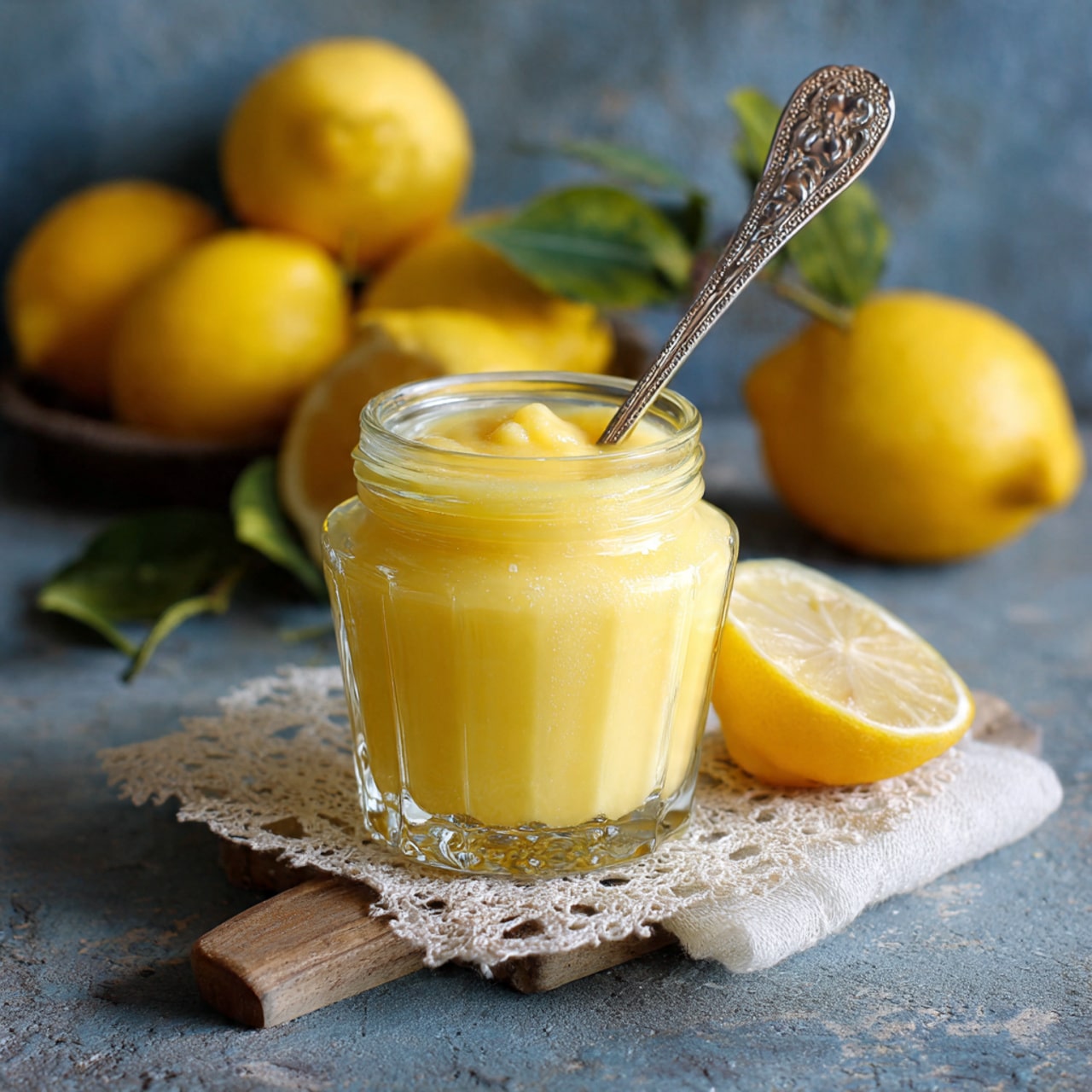
Bright, smooth, and irresistibly tangy, this homemade lemon curd is a simple yet luxurious spread made with just a handful of pantry staples. It comes together quickly and delivers a vibrant citrus flavor with a silky, creamy texture that feels both fresh and indulgent.
Why You’ll Love This Recipe
This lemon curd is wonderfully easy to prepare and requires minimal ingredients without sacrificing flavor or texture. It has the perfect balance of sweet and tart, making it incredibly versatile. You can enjoy it as a spread, a filling, or a topping, and it keeps well for days. Whether you’re a beginner or an experienced home cook, this recipe is reliable, foolproof, and deeply satisfying.
Ingredients
(Tip: You’ll find the full list of ingredients and measurements in the recipe card below.)
Egg yolks – 2 large
Whole eggs – 2 large
Granulated sugar – ¾ cup (150 g)
Fresh lemon zest – 2 tablespoons
Fresh lemon juice – ½ cup (120 ml)
Unsalted butter, cut into cubes – ¼ cup (60 g)
Directions
In a medium heatproof bowl, combine the sugar and lemon zest. Using your fingertips, rub the zest into the sugar until the mixture becomes fragrant and slightly moist. This releases the natural lemon oils and enhances the citrus flavor.
Add the egg yolks and whole eggs to the bowl and whisk until well combined and slightly thickened. Slowly whisk in the fresh lemon juice until the mixture is smooth.
Place the bowl over a saucepan of gently simmering water, making sure the bottom of the bowl does not touch the water. Cook the mixture over low heat, whisking constantly, for about 8 to 10 minutes, until it thickens enough to coat the back of a spoon. Do not allow the mixture to boil.
Remove the bowl from the heat and immediately whisk in the butter cubes until fully melted and the curd looks smooth and glossy.
Strain the lemon curd through a fine-mesh sieve into a clean bowl or jar to remove any bits of cooked egg or zest for an ultra-smooth finish.
Press a piece of plastic wrap directly onto the surface of the curd to prevent a skin from forming. Allow it to cool to room temperature, then refrigerate for at least 2 hours before using. The curd will thicken further as it chills.
Servings and timing
This recipe yields about 1½ cups of lemon curd, which equals approximately 8 servings of 2 to 3 tablespoons each.
Prep time: 10 minutes
Cook time: 10 minutes
Chilling time: 2 hours
Total time: about 2 hours and 20 minutes
Variations
For an extra creamy and custard-like lemon curd, replace the two whole eggs with two additional egg yolks.
To make a dairy-free version, substitute the butter with a high-quality plant-based butter alternative.
For a slightly sweeter and less sharp flavor, use Meyer lemons instead of regular lemons.
You can also adapt this recipe to other citrus fruits such as lime or grapefruit by swapping the zest and juice in equal amounts.
Storage/Reheating
Store lemon curd in an airtight jar or container in the refrigerator for up to one week.
For longer storage, freeze it for up to three months. Thaw overnight in the refrigerator before use.
Lemon curd does not require reheating, but if needed, gently warm it over a water bath while stirring until smooth.
FAQs
What is lemon curd?
Lemon curd is a smooth, creamy spread made from lemon juice, zest, sugar, eggs, and butter, cooked gently until thick.
Why did my lemon curd turn lumpy?
Lumps usually form if the curd is cooked over too high heat or allowed to boil, which can scramble the eggs.
How do I know when lemon curd is done?
It is ready when it coats the back of a spoon and a line drawn through it with your finger stays clean.
Can I make lemon curd without a double boiler?
Yes, but it must be cooked over very low heat with constant whisking to prevent curdling.
Can I use bottled lemon juice?
Fresh lemon juice is strongly recommended, as bottled juice lacks the brightness and natural oils from fresh lemons.
Does lemon curd thicken as it cools?
Yes, it will continue to thicken significantly once chilled in the refrigerator.
Can I use salted butter?
Unsalted butter is preferred for better control over flavor, but salted butter can work if no extra salt is added.
Is lemon curd served hot or cold?
Lemon curd is typically served chilled or at room temperature.
Can I use lemon curd as a cake filling?
Yes, it works beautifully as a filling for cakes, tarts, cupcakes, and pastries.
Why should I strain lemon curd?
Straining removes any small bits of cooked egg or zest, resulting in a silky, professional-quality texture.
Conclusion
This easy homemade lemon curd is a timeless recipe that delivers bold citrus flavor with minimal effort. With its smooth texture, balanced sweetness, and endless uses, it’s a kitchen staple worth mastering. Once you make it from scratch, you’ll find yourself reaching for it again and again to brighten both sweet and savory dishes.
This easy homemade lemon curd is a smooth, tangy, and vibrant spread made with just four basic ingredients. Perfect for spreading, filling, or topping, it comes together quickly and delivers a luxurious citrus flavor in every spoonful.
Ingredients
2 large egg yolks
2 large whole eggs
3/4 cup (150 g) granulated sugar
2 tablespoons fresh lemon zest
1/2 cup (120 ml) fresh lemon juice
1/4 cup (60 g) unsalted butter, cut into cubes
Instructions
In a heatproof bowl, combine sugar and lemon zest. Rub with fingertips until fragrant and moist.
Whisk in egg yolks and whole eggs until smooth and slightly thickened. Slowly add lemon juice, whisking until smooth.
Place the bowl over a saucepan of simmering water (double boiler method), ensuring the bowl doesn’t touch the water. Cook over low heat, whisking constantly, for 8–10 minutes until the mixture thickens and coats the back of a spoon.
Remove from heat and whisk in butter cubes until melted and the curd is glossy.
Strain the curd through a fine-mesh sieve into a clean bowl or jar.
Cover with plastic wrap pressed directly on the surface. Cool to room temperature, then refrigerate for at least 2 hours.
Notes
Use fresh lemons for the brightest flavor and best results.
Straining the curd creates a silky, smooth texture.
Meyer lemons can be used for a sweeter variation.
Substitute butter with dairy-free alternative for a vegan option.