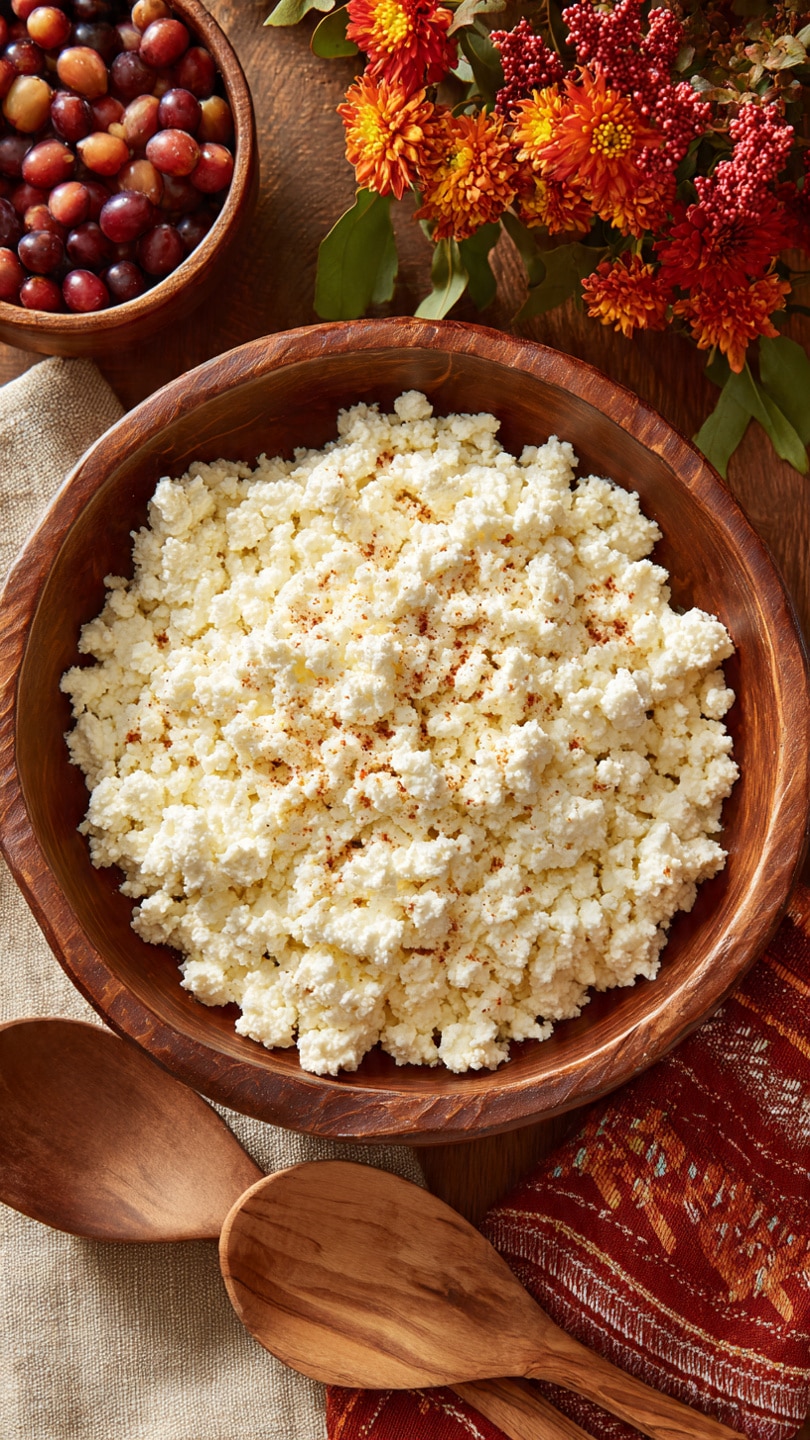
Making your own ricotta is surprisingly simple — and far more rewarding than buying the store-bought version. The result is fresh, creamy, and flavorful; whether you prefer a soft spreadable texture for crostini or a firmer curd for lasagna or ravioli, you control the consistency by how long you drain it. Plus, homemade ricotta doesn’t contain stabilizers or preservatives, and it can transform everyday dishes — from pasta to desserts — into something special.
Ingredients
(Tip: You’ll find the full list of ingredients and measurements in the recipe card below.)
4 cups whole milk
½ cup heavy cream
1¼ teaspoons kosher salt
2 tablespoons white distilled vinegar
Directions
In a medium pot, combine the whole milk, heavy cream, and kosher salt. Gently warm the mixture over medium heat until it nearly reaches a simmer (you don’t want it to boil violently).
Remove from heat and stir in the white distilled vinegar. Stir gently once — enough to combine — then set the pot aside undisturbed. In a few minutes, you’ll see curds begin to form as the milk coagulates.
Meanwhile, line a colander with a few layers of cheesecloth (or a clean, thin dish towel) and set the colander over a large bowl to catch the whey.
Carefully pour the curds and whey into the lined colander. Let the curds drain, undisturbed, for at least 1 hour for a soft, spreadable ricotta. For a firmer, drier curd (better for filling pasta or layering in lasagna), allow the ricotta to drain longer — up to 2 hours or more depending on your desired consistency.
Once drained to your liking, transfer the ricotta into a container, cover, and refrigerate until ready to use.
Servings and timing
Yields about 1 to 1¼ cups of ricotta (depending on draining time) — enough for 2 to 4 servings when used as filling, pasta topping, or a spread. The whole process takes roughly 20 minutes of active work and 1–2 hours of draining time.
Storage/Reheating
Store homemade ricotta in an airtight container in the refrigerator. Use within 4–5 days for best freshness. Do not reheat — instead, use cold or gently fold into warm dishes (e.g. mix into warm pasta or as a filling for lasagna before baking).
FAQs
What type of milk should I use?
Use pasteurized whole cow’s milk — not ultra-pasteurized — because ultra-pasteurized milk may not curdle properly. Whole milk gives a richer yield than lower-fat milks.
Can I make ricotta without heavy cream?
Yes. If you omit the cream, you’ll get a lighter, more delicate ricotta — though it may yield slightly less and be less creamy. The result still works well for lasagna or dishes where richness is not critical.
Can I use lemon juice instead of vinegar?
Yes. An acid like fresh lemon juice works much the same as vinegar to cause curdling. Just be aware that lemon may add a faint citrus note, which can be pleasant in some dishes, but may alter mild recipes slightly.
Why does the ricotta come out runny sometimes?
If you don’t drain it long enough, the curds will retain too much whey, resulting in a loose or wet texture. Drain longer — or even refrigerate the curds in a strainer overnight — to achieve a firmer ricotta.
What can I do with the leftover whey?
The whey can be saved and used in soups, sauces, or even in bread or pancake batters — it’s liquid rich in protein and adds subtle flavor.
Can I scale up the recipe?
Yes. The proportions scale nicely. Just maintain the same ratio of milk, cream, salt, and acid. Also give extra draining time if you make a larger batch.
Is homemade ricotta safe to eat raw?
Yes — as long as you start with pasteurized milk and practice good hygiene. Because curdling is induced by acid (vinegar or lemon) and not by aging, the risk is similar to that of fresh dairy or yogurt.
How do I choose between soft and firm ricotta?
If you want ricotta for spreading on bread or mixing into creamy dips, drain for 1 hour for a soft, moist texture. For dishes like lasagna, ravioli, or stuffed pasta, drain longer for a firmer, drier curd that won’t release too much moisture during cooking.
Can I flavor my ricotta?
Yes. Once drained, you can stir in herbs, salt, pepper, olive oil, or a touch of honey (for a sweet use) to complement how you plan to serve it.
How long will homemade ricotta last?
When stored in a sealed container and kept refrigerated, it will stay good for about 4–5 days. Always check for freshness before use — if it smells sour or visibly changes, discard it.
Conclusion
This ricotta — fresh, creamy, and infinitely customizable — offers a simple, rewarding way to elevate your cooking. Whether you want a silky spread for crostini, a rich filling for lasagna or ravioli, or a creamy base for desserts, homemade ricotta delivers with minimal effort and maximum flavor. Once you try making it yourself, chances are you’ll never go back to the store-bought kind.
A fresh, creamy homemade ricotta cheese made with whole milk, cream, and vinegar. Easy to prepare and customizable in texture, it’s perfect for spreads, pasta fillings, or desserts.
Ingredients
4 cups whole milk
1/2 cup heavy cream
1 1/4 teaspoons kosher salt
2 tablespoons white distilled vinegar
Instructions
In a medium pot, combine the whole milk, heavy cream, and kosher salt. Warm gently over medium heat until just below a simmer.
Remove from heat and stir in the white distilled vinegar. Stir once to combine and let sit undisturbed until curds form.
Line a colander with cheesecloth and place it over a large bowl.
Carefully pour the curds and whey into the colander and allow to drain for at least 1 hour for soft ricotta, or up to 2 hours for firmer curds.
Transfer the drained ricotta to a container, cover, and refrigerate until ready to use.
Notes
Use pasteurized (not ultra-pasteurized) milk for best curdling.
For a lighter version, omit the cream.
Drain longer for firmer ricotta suitable for pasta fillings.
Lemon juice can be used in place of vinegar, but may add a citrus note.
Leftover whey can be used in soups, baking, or smoothies.