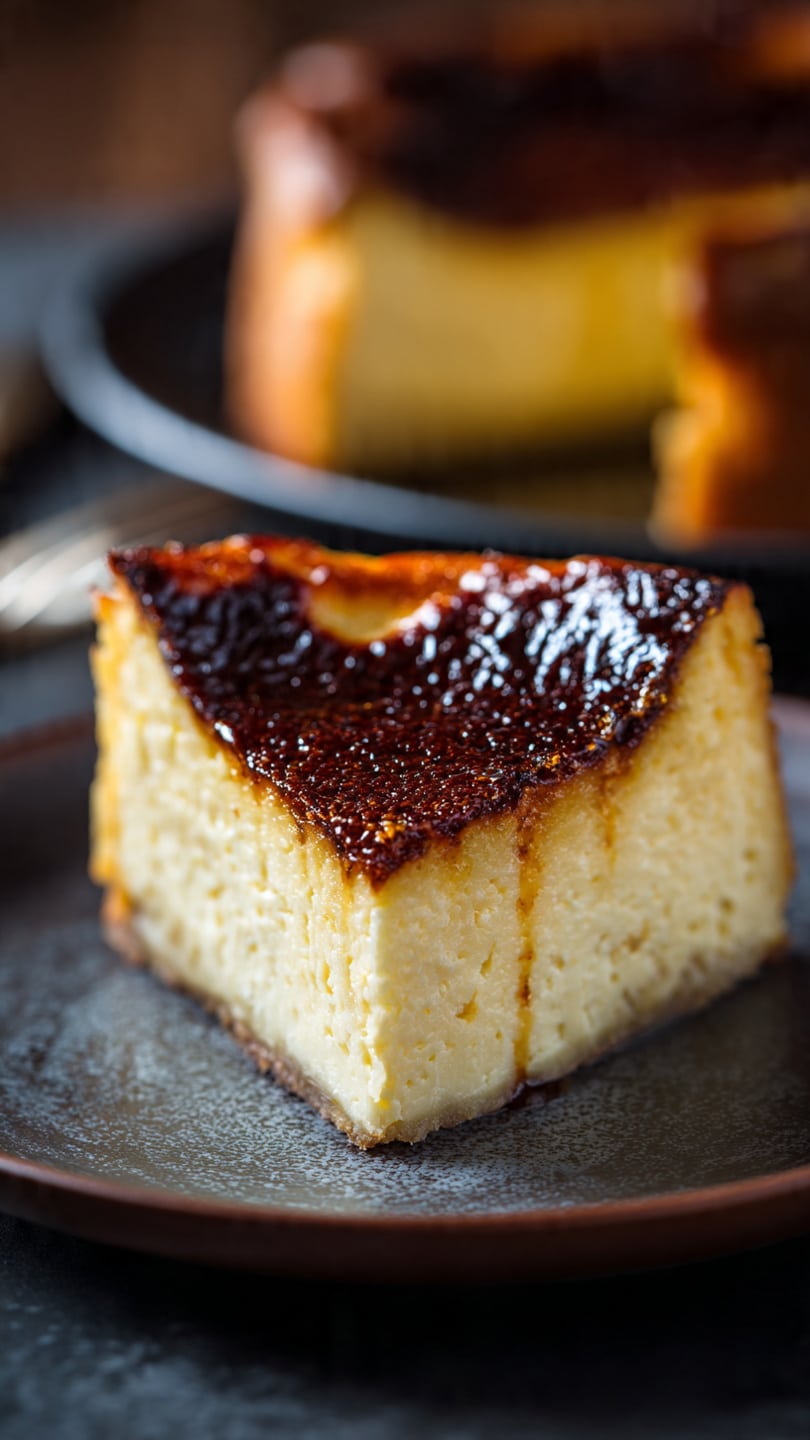
This burnt honey Basque cheesecake is rich, creamy, and beautifully caramelised, with a soft, almost mousse-like centre and a deeply flavoured honey glaze that adds complexity without overwhelming the cheesecake. It’s a refined yet rustic dessert that feels special while remaining surprisingly simple to prepare.
Why You’ll Love This Recipe
This recipe delivers the signature Basque cheesecake texture: lightly burnt on the outside and luxuriously creamy inside. The addition of a burnt honey glaze brings a subtle bitterness and depth that balances the sweetness perfectly. It requires no water bath, no crust, and minimal fuss, making it ideal for both confident bakers and adventurous beginners.
Ingredients
(Tip: You’ll find the full list of ingredients and measurements in the recipe card below.)
Cheesecake
430 g cream cheese, softened
100 g white granulated sugar
3 large eggs
15 g plain all-purpose flour
270 ml thickened whipping cream
15 ml fresh lemon juice
Seeds from 1 vanilla bean
Burnt honey glaze
150 g honey
50 ml water
Directions
Preheat the oven to 200°C (400°F). Line an 18 cm (7-inch) springform cake tin with baking paper, allowing the paper to rise above the sides for easy removal.
Place the softened cream cheese and sugar into a stand mixer fitted with a paddle attachment. Mix on medium speed for about 5 minutes until smooth and creamy.
Add the eggs one at a time, mixing well after each addition.
Add the flour and continue mixing for 3 minutes to fully incorporate.
Slowly pour in the cream, lemon juice, and vanilla seeds. Mix until the batter is smooth, scraping down the sides of the bowl to remove any lumps.
Pour the mixture into the prepared tin and bake for 25 to 27 minutes. The top should be deeply caramelised while the centre remains wobbly.
Remove from the oven and allow the cheesecake to cool completely at room temperature, then refrigerate until chilled.
For the burnt honey glaze, place the honey in a small saucepan over medium heat. Cook until the edges begin to caramelise and darken.
Stir occasionally and continue cooking until the honey turns a deep amber colour.
Carefully whisk in the water a little at a time. Allow the mixture to simmer briefly, then remove from the heat and let cool to about 35–40°C (95–104°F).
Brush the cooled glaze evenly over the surface of the chilled cheesecake.
Remove the cheesecake from the tin and serve cold.
Servings and timing
Servings: 6 to 8 slices
Preparation time: 20 minutes
Baking time: 25–27 minutes
Cooling and chilling time: 3 to 4 hours
Total time: Approximately 4½ hours
Variations
You can infuse the cream with citrus zest before mixing for a subtle orange or lemon note. For a deeper flavour, substitute part of the honey with a darker variety. A touch of cinnamon or cardamom in the glaze can also add warmth and complexity.
Storage/Reheating
Store the cheesecake covered in the refrigerator for up to 4 days. This dessert is best served chilled and does not require reheating. If the honey glaze firms up too much, allow the cheesecake to sit at room temperature for a few minutes before serving.
FAQs
What makes a Basque cheesecake different from a regular cheesecake?
Basque cheesecake is baked at a high temperature, creating a burnt exterior and a soft, custard-like centre without a crust.
Does this cheesecake need a water bath?
No, this style of cheesecake is designed to be baked directly at high heat without a water bath.
Can I use vanilla extract instead of a vanilla bean?
Yes, you can substitute with 1 teaspoon of pure vanilla extract.
Why is the centre wobbly after baking?
The wobble indicates the creamy interior texture that sets further as it cools.
Can I make this cheesecake a day ahead?
Yes, it actually improves in texture and flavour after chilling overnight.
What type of honey works best?
A good-quality floral honey works well, but darker honey will give a stronger caramel flavour.
How do I know when the honey is burnt enough?
It should reach a deep amber colour with a slightly bitter aroma, but not black.
Can I freeze this cheesecake?
Freezing is not recommended as it can alter the creamy texture.
Why is baking paper necessary?
The batter is very liquid, and baking paper prevents sticking and supports the tall sides.
Can I use a larger tin?
A larger tin will produce a thinner cheesecake and may require a shorter baking time.
Conclusion
This burnt honey Basque cheesecake is a stunning dessert that combines simplicity with bold flavour. With its caramelised top, creamy interior, and sophisticated honey glaze, it’s a show-stopping treat perfect for special occasions or when you want to elevate a classic cheesecake into something truly memorable.
This burnt honey Basque cheesecake is a rich and creamy dessert with a caramelised top and a soft, custard-like centre. A burnt honey glaze adds depth and complexity, balancing the sweetness and elevating this rustic yet refined cheesecake.
Ingredients
430 g cream cheese, softened
100 g white granulated sugar
3 large eggs
15 g plain all-purpose flour
270 ml thickened whipping cream
15 ml fresh lemon juice
Seeds from 1 vanilla bean (or 1 tsp vanilla extract)
150 g honey
50 ml water
Instructions
Preheat oven to 200°C (400°F). Line an 18 cm (7-inch) springform tin with baking paper, letting it overhang the sides.
In a stand mixer with paddle attachment, beat cream cheese and sugar on medium speed for 5 minutes until smooth.
Add eggs one at a time, mixing well after each addition.
Add flour and mix for 3 minutes until fully incorporated.
Gradually add cream, lemon juice, and vanilla seeds. Mix until smooth, scraping down the sides as needed.
Pour batter into prepared tin and bake for 25–27 minutes, until the top is dark and centre is still wobbly.
Let cool at room temperature, then chill in fridge for 3–4 hours.
For the glaze, heat honey in a small saucepan over medium heat until edges darken and caramelise. Stir occasionally.
When honey reaches a deep amber colour, carefully whisk in water a little at a time. Simmer briefly, then cool to 35–40°C (95–104°F).
Brush cooled glaze over chilled cheesecake. Remove cheesecake from tin and serve cold.
Notes
Use a good-quality honey—darker varieties will give a deeper flavour.
Infuse cream with citrus zest before mixing for added brightness.
A touch of cinnamon or cardamom in the glaze adds warmth.
This cheesecake is best served cold and can be made a day in advance.
Use baking paper to support the sides and prevent sticking as the batter is very loose.